Irrigation for Brinjal (Eggplant): Complete Water Management Guide for Higher Yield
Brinjal (eggplant), also known as baingan, is one of the most widely grown vegetable crops in India. It is cultivated throughout the year in different regions due to its adaptability and high market demand. Major brinjal-producing states include West Bengal, Odisha, Bihar, Karnataka, and Maharashtra.
Brinjal is a moderately deep-rooted crop but highly sensitive to both moisture stress and waterlogging. Proper irrigation management plays a critical role in ensuring healthy plant growth, better fruit development, and higher yield. Inconsistent watering can lead to flower drop, poor fruit size, and increased pest infestation.
If you are learning about broader practices like Irrigation in India, understanding crop-specific irrigation like brinjal is essential for maximizing farm productivity.
Importance of Irrigation in Brinjal Cultivation
Brinjal requires a consistent supply of moisture throughout its growing period. Proper irrigation helps maintain plant health and improves fruit quality.
- Ensures proper seedling establishment after transplanting
- Promotes vegetative growth and branching
- Enhances flowering and fruit setting
- Improves fruit size, shine, and market quality
- Reduces flower and fruit drop
Both under-irrigation and over-irrigation can negatively affect crop performance.
Water Requirement of Brinjal
Brinjal requires approximately 600 mm to 800 mm of water during its entire crop cycle. The exact water requirement depends on soil type, climate, and irrigation method.
Factors influencing water requirement:
- Soil type (sandy soils need frequent irrigation)
- Temperature and humidity
- Growth stage of the crop
- Season of cultivation
Compared to tomato irrigation, brinjal requires slightly more water due to its longer crop duration.
Critical Stages for Irrigation in Brinjal
Transplanting Stage (0–10 Days)
Light irrigation is necessary immediately after transplanting to ensure proper root establishment.
Vegetative Growth Stage (10–30 Days)
Regular irrigation supports healthy plant growth and branching.
Flowering Stage (30–50 Days)
This is a critical stage. Moisture stress can lead to flower drop and reduced fruit setting.
Fruit Development Stage (50–90 Days)
Consistent moisture is essential for proper fruit growth and size.
Harvesting Stage
Moderate irrigation should be maintained to support continuous harvesting.
Irrigation Schedule for Brinjal
The irrigation frequency depends on soil and climatic conditions:
- Sandy soil: Every 2–3 days
- Loamy soil: Every 4–5 days
- Clay soil: Every 6–7 days
Frequent light irrigation is preferred over heavy irrigation at longer intervals.
Best Irrigation Methods for Brinjal
Furrow Irrigation
Traditional method where water flows through channels between rows.
- Easy and low-cost
- Suitable for small farms
- Requires proper land leveling
Sprinkler Irrigation
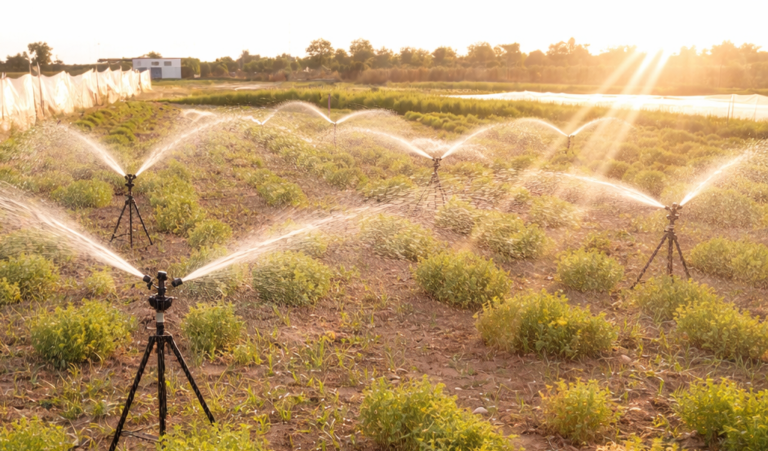
Sprinklers provide uniform water distribution, especially in uneven fields.
Learn more in Types of Irrigation in India.
Drip Irrigation (Highly Recommended)
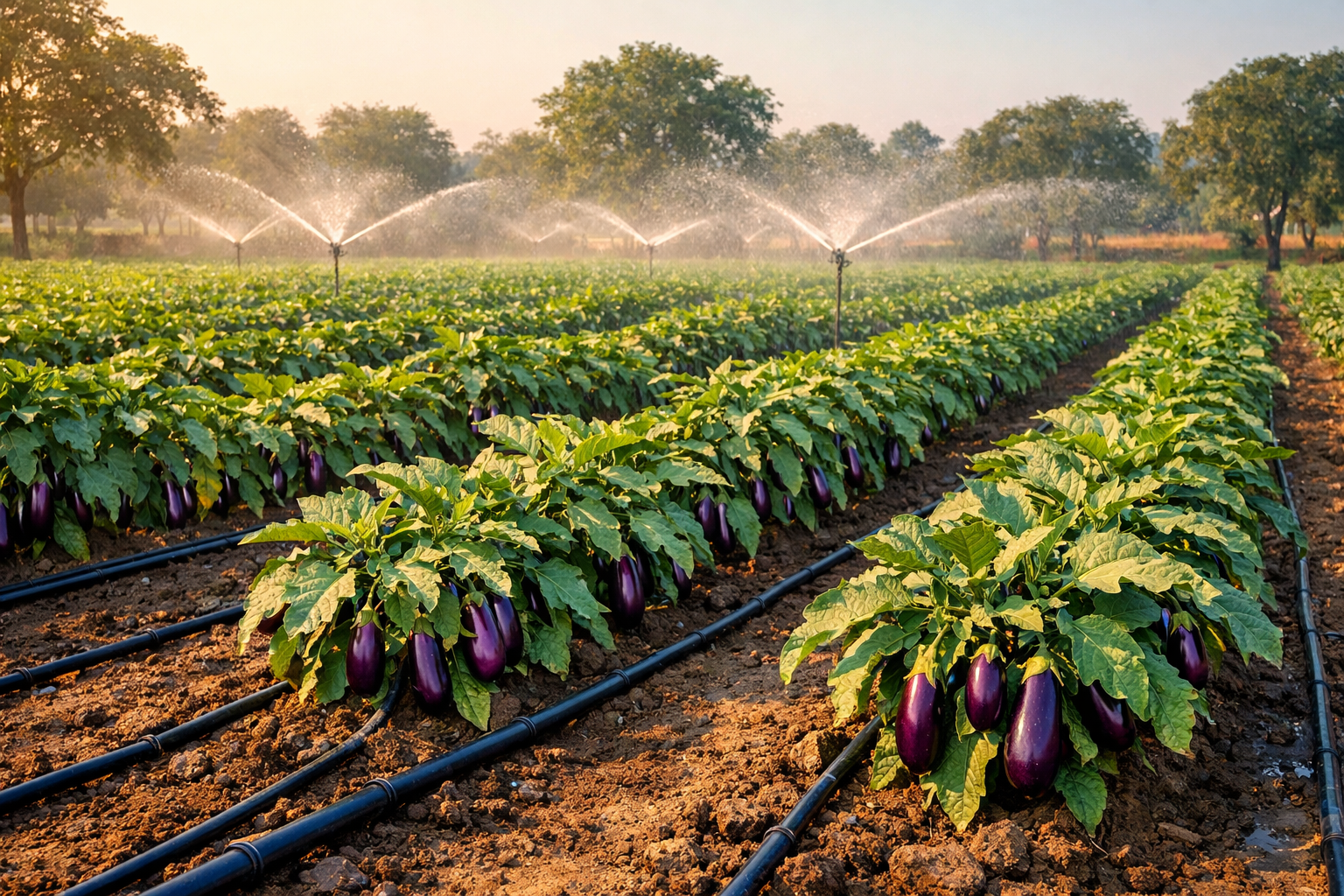
Drip irrigation is the most efficient method for brinjal cultivation.
- Saves water up to 50–60%
- Maintains uniform soil moisture
- Reduces weed growth
- Improves fruit quality and yield
- Supports fertigation
Drip irrigation is ideal for commercial farming and water-scarce regions.
Drainage Management in Brinjal Fields
Brinjal plants are sensitive to waterlogging, which can lead to root rot and fungal diseases.
- Ensure proper field leveling
- Use raised beds or ridges
- Avoid excess irrigation
- Provide drainage channels
Impact of Irrigation on Brinjal Yield
Efficient irrigation management significantly improves yield and fruit quality.
- Increases fruit size and uniformity
- Enhances shine and market appeal
- Reduces flower and fruit drop
- Boosts overall productivity
Proper irrigation can increase yield by 25–40%.
Water-Saving Tips for Brinjal Farming
- Adopt drip irrigation systems
- Use organic or plastic mulching
- Irrigate during early morning or evening
- Monitor soil moisture regularly
- Avoid over-irrigation
Common Irrigation Mistakes to Avoid
- Over-irrigation leading to root diseases
- Irregular watering causing flower drop
- Ignoring critical growth stages
- Poor drainage management
Avoiding these mistakes ensures better crop performance and higher profits.
FAQs on Irrigation for Brinjal
How often should brinjal be irrigated?
Brinjal should be irrigated every 2–6 days depending on soil type and weather.
Which stage is most critical for irrigation?
Flowering and fruit development stages are the most critical.
How much water does brinjal require?
Brinjal requires around 600–800 mm of water during the crop cycle.
Is drip irrigation suitable for brinjal?
Yes, drip irrigation is the most efficient method for brinjal cultivation.
Does over-irrigation affect brinjal plants?
Yes, it can cause root rot and reduce yield.
Can brinjal tolerate drought?
Brinjal can tolerate mild stress, but prolonged drought reduces yield significantly.
Conclusion
Proper irrigation management is essential for successful brinjal cultivation. Since the crop is sensitive to both excess and insufficient water, maintaining consistent soil moisture throughout its growth stages is crucial for achieving high yield and quality fruits.
Farmers who adopt efficient irrigation methods like drip systems, ensure proper drainage, and follow a structured irrigation schedule can significantly improve productivity. By integrating these practices with resources from Simple Irrigation, growers can achieve sustainable and profitable vegetable farming.