Irrigation for Pigeon Pea (Arhar/Tur): Practical Water Management for Higher Yield
Irrigation for Pigeon Pea (Arhar/Tur) plays an important role in improving productivity, especially in regions where monsoon rainfall is uneven or ends early. Pigeon pea is a major pulse crop in India, widely cultivated during the Kharif season. It is valued for its protein-rich grains, ability to fix atmospheric nitrogen, and suitability for dryland farming systems.
Pigeon pea is generally considered a drought-tolerant crop because of its deep root system. However, prolonged dry spells during flowering and pod development can significantly reduce yield. Scientific irrigation management helps ensure stable production, better pod setting, and improved grain filling.
Importance of Irrigation in Pigeon Pea Cultivation
Pigeon pea has a strong taproot that penetrates deep into the soil profile, allowing it to extract moisture from lower layers. This makes it relatively resilient under moisture stress compared to shallow-rooted crops. Despite this advantage, moisture stress at critical stages can reduce flower retention and pod formation.
Proper irrigation in pigeon pea cultivation helps in:
- Uniform crop establishment
- Better vegetative growth and branching
- Improved flowering and pod setting
- Higher grain weight
- Reduced flower and pod drop
Even one or two timely irrigations during critical growth stages can significantly enhance yield in moisture-deficient areas.
Water Requirement of Pigeon Pea
The total water requirement of pigeon pea ranges between 500 mm and 800 mm, depending on the duration of the variety, soil type, and climatic conditions. Long-duration varieties require more moisture compared to short-duration ones.
Factors influencing water requirement include:
- Rainfall distribution during the Kharif season
- Soil texture and water-holding capacity
- Crop duration (short, medium, or long)
- Temperature and evaporation rate
In areas with well-distributed monsoon rainfall, pigeon pea may not require irrigation. However, supplemental irrigation becomes necessary when dry spells occur during reproductive stages.
Critical Growth Stages for Irrigation in Pigeon Pea
Although pigeon pea is drought-tolerant, certain stages are highly sensitive to moisture stress. Irrigation during these periods improves productivity.
Germination and Establishment Stage (0-20 Days)
Adequate soil moisture at sowing ensures proper germination and strong seedling growth. If rainfall is delayed, pre-sowing irrigation may be necessary.
Branching Stage (30-45 Days)
Moisture during branching promotes vegetative growth and increases the number of productive branches.
Flowering Stage (60-90 Days)
This is the most critical stage for irrigation in pigeon pea. Moisture stress during flowering leads to flower drop and poor pod setting.
Pod Development Stage (90-120 Days)
Proper soil moisture during pod formation ensures better seed filling and higher grain weight. Water stress at this stage reduces yield and grain quality.
Number of Irrigations Required
The number of irrigations depends largely on rainfall and soil conditions:
- Rainfed conditions: Usually no irrigation if rainfall is adequate
- Supplemental irrigation: 1–2 irrigations during flowering and pod formation
- Long-duration varieties in dry areas: 2–3 irrigations may be required
If water availability is limited, irrigation should be prioritized at the flowering stage.
Methods of Irrigation for Pigeon Pea
Furrow Irrigation
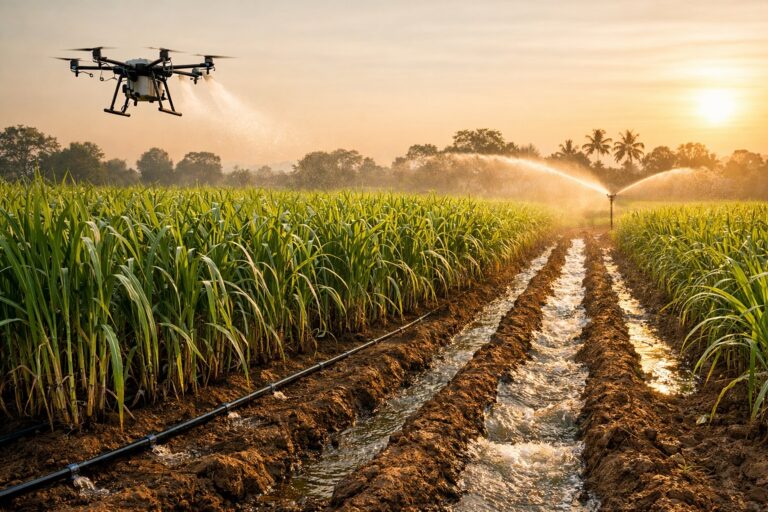
Furrow irrigation is widely practiced in pigeon pea cultivation. Water is applied between crop rows, allowing gradual infiltration into the root zone. This method minimizes waterlogging and improves water-use efficiency.
Flood Irrigation
Flood irrigation is sometimes used, but should be carefully managed to avoid excess moisture. Over-irrigation can increase the risk of root diseases.
Sprinkler Irrigation
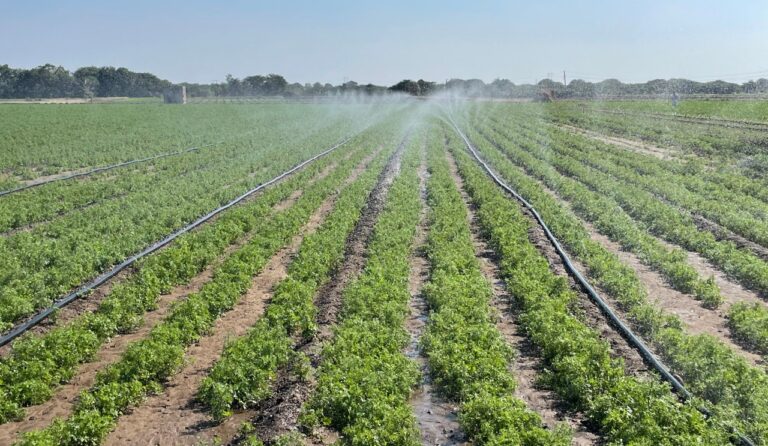
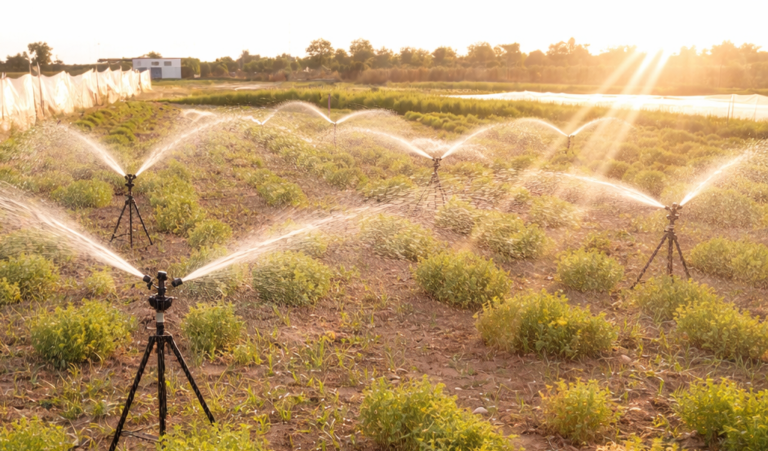
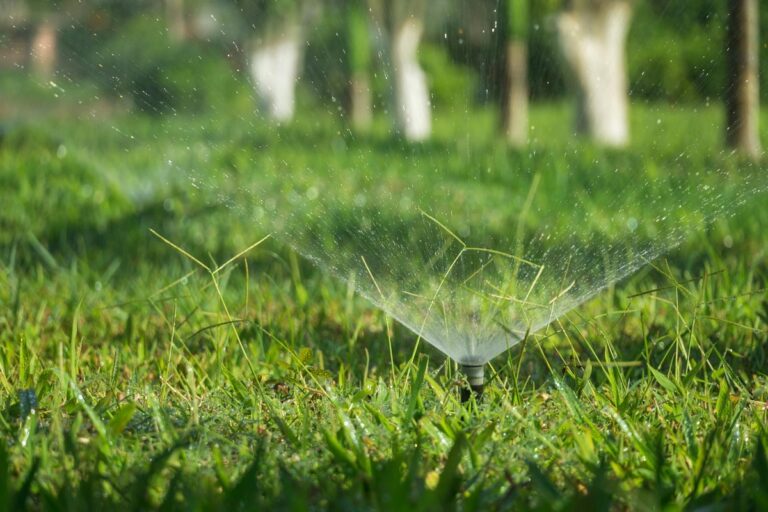
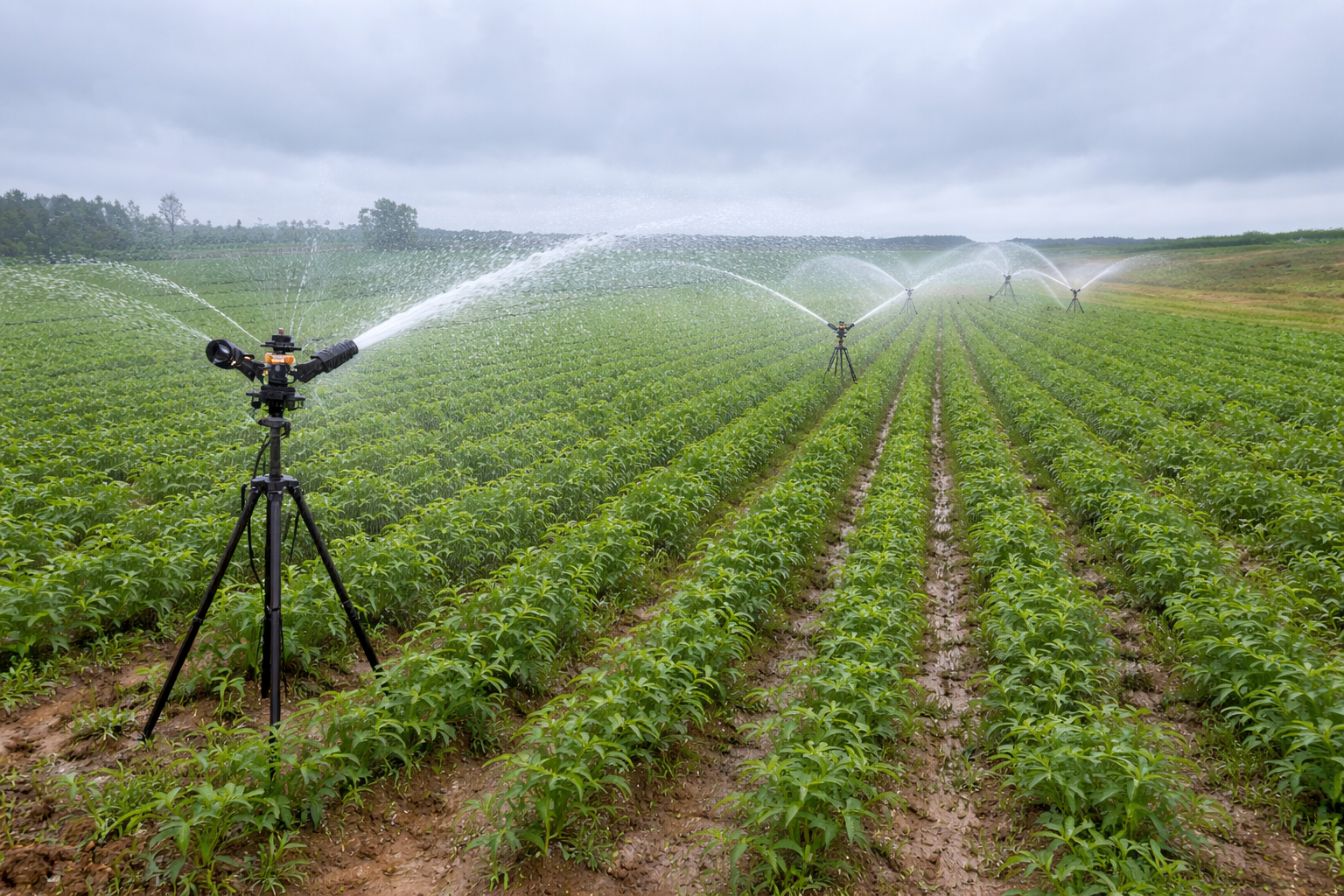
Sprinkler systems are suitable for light soils and undulating land. They ensure uniform water distribution and reduce runoff.
- Efficient water use
- Uniform coverage
- Suitable for sandy soils
Drip Irrigation
Drip irrigation is highly efficient for pigeon pea, especially in water-scarce regions. It delivers water directly to the root zone and reduces evaporation losses.
Drip systems also support fertigation, improving nutrient uptake and crop growth.
Drainage Management in Pigeon Pea Fields
Pigeon pea is sensitive to waterlogging despite its drought tolerance. Prolonged standing water can damage roots and reduce nodulation.
To maintain proper drainage:
- Ensure proper field leveling
- Provide drainage channels in heavy soils
- Avoid excessive irrigation during cloudy weather
Well-drained soils promote healthy root growth and better nitrogen fixation.
Impact of Irrigation on Yield and Grain Quality
Timely irrigation improves flower retention, pod number, and seed size. Moisture stress during reproductive stages can reduce yield by 25–40 percent.
Balanced irrigation enhances grain quality and ensures better market value.
Water-Saving Techniques in Pigeon Pea Cultivation
- Mulching to reduce evaporation
- Alternate furrow irrigation
- Laser land leveling for uniform distribution
- Selection of short-duration drought-tolerant varieties
- Soil moisture monitoring before irrigation
These techniques help conserve water while maintaining stable production.
Common Irrigation Mistakes in Pigeon Pea Farming
- Skipping irrigation during flowering
- Over-irrigation in heavy soils
- Poor drainage management
- Applying irrigation during the maturity stage
Avoiding these mistakes ensures better pod development and healthy crop growth.
Climate Considerations for Pigeon Pea Irrigation
Pigeon pea is mainly grown during the monsoon season. However, delayed or early withdrawal of the monsoon can cause moisture stress. Monitoring rainfall patterns helps in planning supplemental irrigation effectively.
In regions with erratic rainfall, efficient irrigation systems like drip or sprinkler can provide better control over water application.
FAQs on Irrigation for Pigeon Pea
How much water does pigeon pea require?
Pigeon pea requires approximately 500-800 mm of water depending on variety and climate.
Which stage is most critical for irrigation in pigeon pea?
The flowering stage is the most critical for irrigation.
Can pigeon pea be grown without irrigation?
Yes, pigeon pea is commonly grown under rainfed conditions but benefits from 1-2 supplemental irrigations.
Is drip irrigation suitable for pigeon pea?
Yes, drip irrigation improves water-use efficiency and supports better nutrient management.
Does waterlogging affect pigeon pea?
Yes, prolonged water stagnation damages roots and reduces nitrogen fixation.
How many irrigations are required in dry regions?
In dry regions, 2-3 irrigations during reproductive stages are generally sufficient.
Should irrigation be stopped before harvest?
Yes, irrigation should be stopped during maturity to allow proper drying of pods.
Conclusion
Irrigation for Pigeon Pea (Arhar/Tur) requires careful timing rather than excessive water application. Although the crop is drought-tolerant, moisture stress during flowering and pod development can significantly reduce yield.
By adopting efficient irrigation methods, ensuring proper drainage, and prioritizing water application during critical growth stages, farmers can achieve higher productivity while conserving water resources. With proper water management, pigeon pea cultivation becomes more stable, profitable, and sustainable even under challenging climatic conditions.