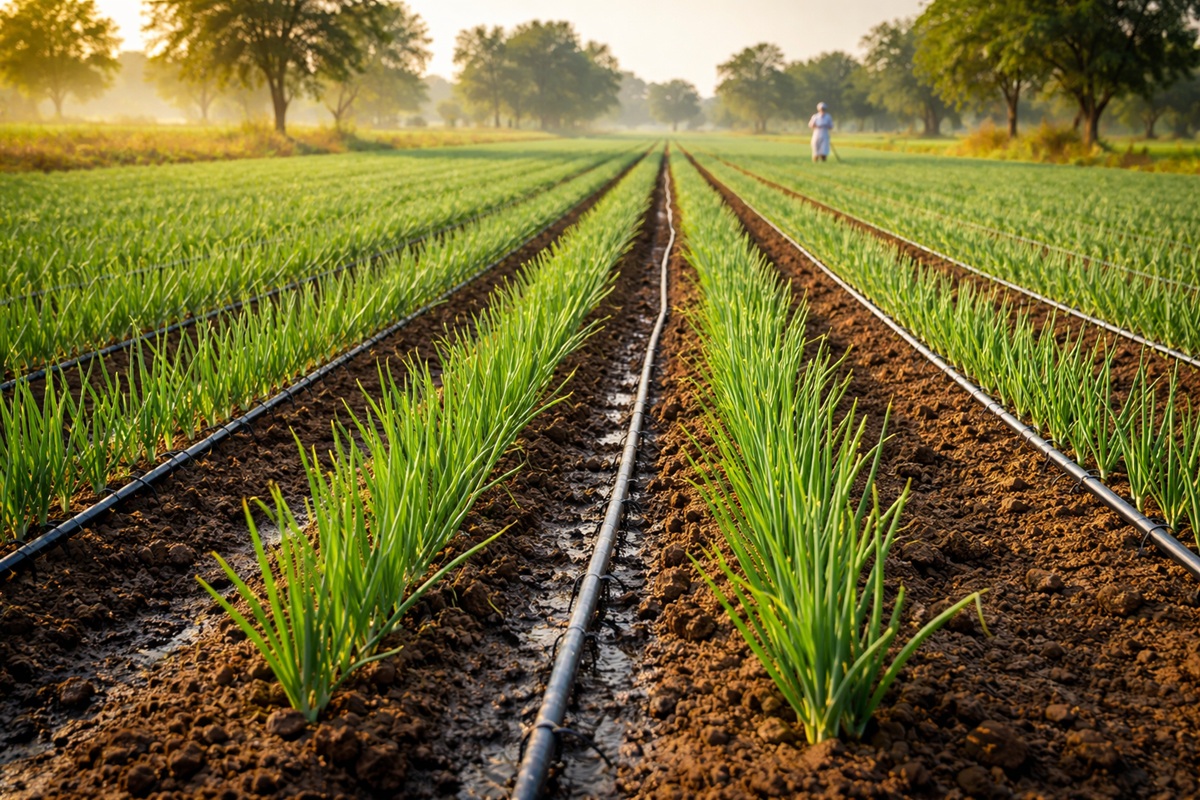
Irrigation for Onion: Complete Water Management Guide for Higher Yield
Onion is one of the most important commercial vegetable crops in India, widely grown for both domestic consumption and export. States like Maharashtra, Karnataka, Madhya Pradesh, Gujarat, and Rajasthan are major producers. Since onions are a shallow-rooted crop, it requires careful and timely irrigation for proper bulb development and higher yield.
Unlike crops that can tolerate moisture stress, onions are highly sensitive to both under-irrigation and over-irrigation. Even a slight imbalance in soil moisture can affect bulb size, shape, and storage quality. Therefore, proper irrigation scheduling is essential for successful onion cultivation.
If you are already exploring Irrigation in India, understanding crop-specific irrigation, like onion, will help improve overall farm productivity.
Why Proper Irrigation is Important for Onion
Onion requires consistent moisture throughout its growing period. Since its root system is shallow, it cannot extract water from deeper soil layers.
- Ensures uniform seed germination
- Supports healthy leaf growth
- Improves bulb formation and size
- Enhances yield and quality
- Prevents splitting and bolting
Irregular watering often results in poor bulb development and reduces market value.
Water Requirement of the Onion Crop
Onion typically requires around 350 mm to 550 mm of water during its full growth cycle. The exact requirement depends on soil type, climate, and variety.
Factors affecting water requirement:
- Soil type (sandy soils need frequent irrigation)
- Temperature and evaporation rate
- Growth stage of the crop
- Season (Rabi, Kharif, or summer)
Compared to crops like potatoes, onions require more frequent but lighter irrigation.
Critical Stages for Irrigation in Onion
Germination Stage (0–10 Days)
Light and frequent irrigation is required to maintain soil moisture for proper seed germination.
Vegetative Growth Stage (15–40 Days)
During this stage, leaves develop rapidly. Adequate moisture ensures strong plant growth.
Bulb Formation Stage (40–70 Days)
This is the most critical stage. Water stress at this stage reduces bulb size and yield.
Bulb Development Stage (70–100 Days)
Consistent moisture helps improve bulb weight and uniformity.
Maturity Stage (100–120 Days)
Irrigation should be stopped 10–15 days before harvesting to improve storage quality.
Irrigation Schedule for Onion
The frequency of irrigation depends on soil type:
- Sandy soil: Every 3–4 days
- Loamy soil: Every 5–7 days
- Clay soil: Every 7–10 days
Maintaining consistent moisture is more important than the quantity of water applied.
Best Irrigation Methods for Onion
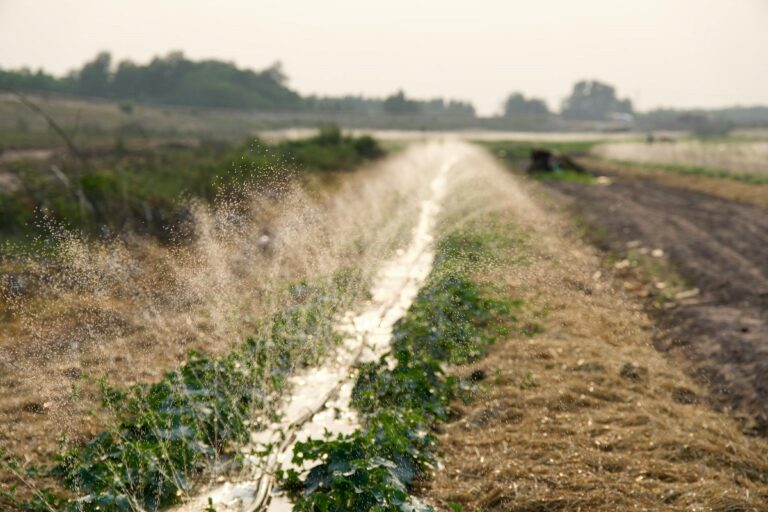
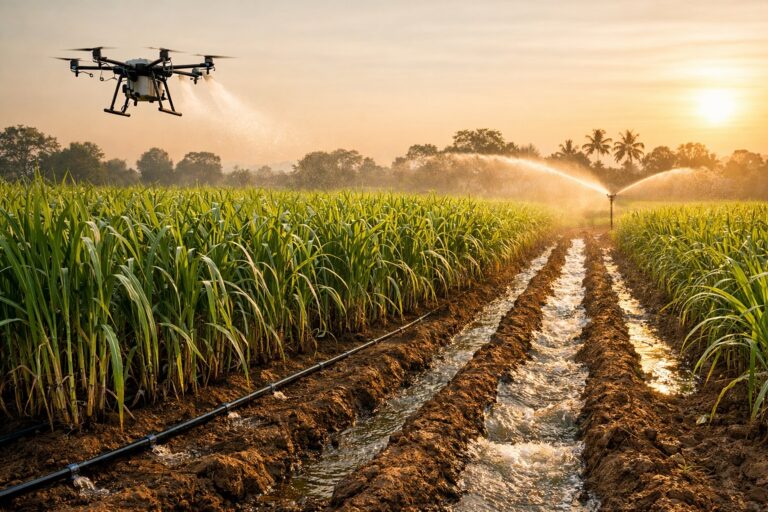
Furrow Irrigation
This is the traditional method where water flows through furrows between rows.
- Easy to manage
- Cost-effective
- Suitable for small farms
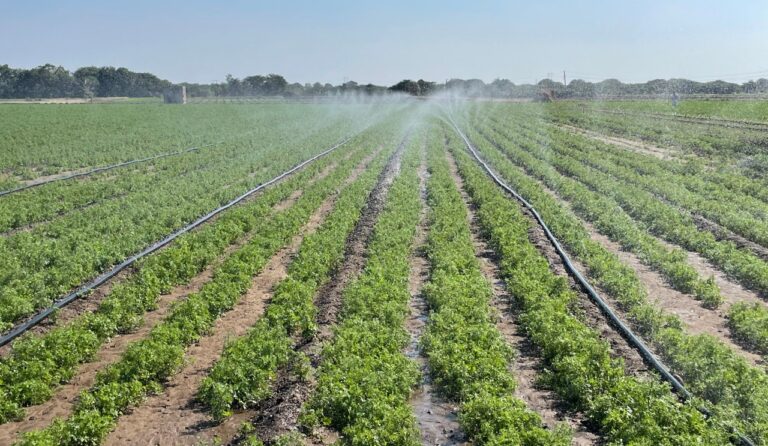
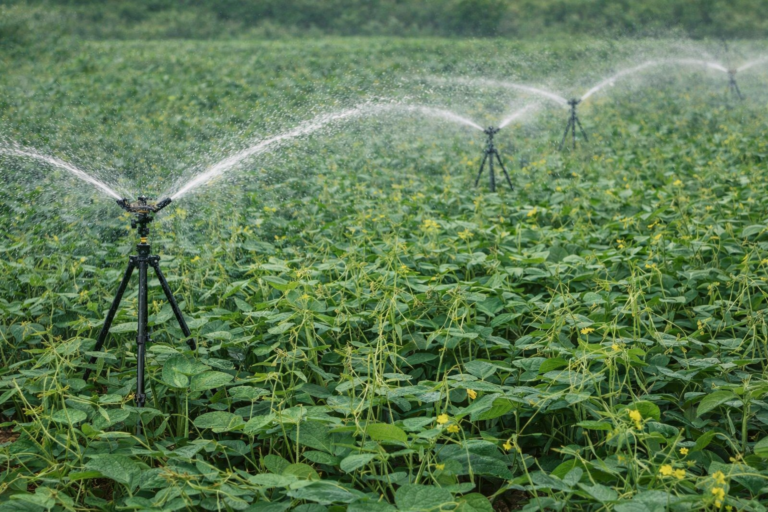
Sprinkler Irrigation
Sprinklers provide uniform water distribution and are useful in sandy soils.
Learn more about different systems in Types of Irrigation in India.
Drip Irrigation (Highly Recommended)
Drip irrigation is the most efficient method for onion cultivation.
- Saves water up to 40–60%
- Reduces weed growth
- Improves bulb size and yield
- Supports fertigation
Drip systems are especially useful in water-scarce areas.
Drainage Management in Onion Fields
Onion is very sensitive to waterlogging. Excess water can lead to root rot and fungal diseases.
- Avoid over-irrigation
- Ensure proper field leveling
- Use raised beds or ridges
- Provide drainage channels
Impact of Irrigation on Onion Yield
Proper irrigation directly affects onion yield and quality. Studies show that efficient irrigation can increase yield by 30–50%.
Benefits include:
- Larger bulb size
- Uniform shape
- Better storage life
- Higher market price
Water-Saving Tips for Onion Farming
- Use drip irrigation systems
- Apply mulching to retain moisture
- Irrigate during the morning or evening
- Monitor soil moisture regularly
- Avoid unnecessary irrigation
Common Irrigation Mistakes to Avoid
- Over-irrigation causes bulb rot
- Irregular watering leading to cracking
- Ignoring critical growth stages
- Poor drainage management
These mistakes can significantly reduce crop yield and quality.
FAQs on Irrigation for Onion
How often should onions be irrigated?
Onion should be irrigated every 3–7 days, depending on soil type and weather conditions.
Which stage is most critical for onion irrigation?
The bulb formation stage is the most critical.
How much water does an onion require?
Onion requires around 350–550 mm of water during the crop cycle.
Is drip irrigation suitable for onions?
Yes, drip irrigation is the most efficient method for onion cultivation.
When should irrigation be stopped?
Irrigation should be stopped 10–15 days before harvesting.
Does irrigation affect onion storage?
Yes, proper irrigation improves bulb quality and storage life.
Conclusion
Efficient irrigation management is essential for successful onion cultivation. Since onions are a shallow-rooted crop, it requires frequent and controlled irrigation throughout their growth period. Special attention should be given during bulb formation and development stages.
Farmers who adopt modern irrigation methods like drip irrigation, maintain proper drainage, and follow a consistent irrigation schedule can significantly improve yield and bulb quality. By combining these practices with knowledge from other guides on Simple Irrigation, farmers can achieve sustainable and profitable vegetable farming.