Irrigation for Potato: Water Management for Higher Yield and Better Tuber Quality
Potato is one of the most widely cultivated food crops in India and plays an important role in food security and farm income. It is grown extensively in states such as Uttar Pradesh, West Bengal, Bihar, Gujarat, Punjab, and Madhya Pradesh. Potatoes are a shallow-rooted crop and require careful irrigation management for proper tuber development and high yield.
Unlike many other crops, potatoes are highly sensitive to both moisture stress and waterlogging. Proper irrigation scheduling is essential to ensure uniform tuber formation, prevent defects, and improve overall productivity. Efficient water management helps farmers achieve better yields, improved tuber size, and higher market value.
Importance of Irrigation in Potato Cultivation
Potatoes require a consistent supply of moisture throughout their growing period. Any fluctuation in soil moisture can affect tuber initiation and development.
Proper irrigation in potato farming helps in:
- Ensuring uniform sprouting and plant establishment
- Supporting healthy vegetative growth
- Promoting proper tuber initiation
- Improving tuber size and uniformity
- Enhancing yield and quality
Moisture stress or excess water can result in poor tuber formation, cracking, or diseases, which directly affect yield and quality.
Water Requirement of Potato
Potatoes require about 500 mm to 700 mm of water during their crop cycle. The exact requirement depends on soil type, climate, variety, and duration of the crop.
Key factors affecting water requirement include:
- Soil texture and water-holding capacity
- Temperature and evaporation rate
- Plant growth stage
- Irrigation method used
Potatoes grow best in well-drained sandy loam soils where moisture is available but excess water does not accumulate.
Critical Growth Stages for Irrigation in Potato
Providing irrigation at the right growth stages is crucial for better tuber development.
Sprouting Stage (0–15 Days)
Moist soil is essential for the proper sprouting of seed tubers. Pre-sowing irrigation may be required if soil moisture is low.
Vegetative Growth Stage (20–30 Days)
During this stage, plants develop leaves and stems. Adequate moisture supports strong plant growth and prepares the crop for tuber formation.
Tuber Initiation Stage (30–45 Days)
This is the most critical stage for irrigation. Moisture stress during this period can reduce the number of tubers formed.
Tuber Development Stage (45–75 Days)
Proper soil moisture during this stage ensures better tuber growth, size, and weight.
Maturity Stage (75–100 Days)
Irrigation should be reduced and eventually stopped during maturity to allow tubers to harden and prepare for harvesting.
Number of Irrigations Required for Potato
The number of irrigations varies based on soil type and weather conditions.
- Light soils: 8–10 irrigations
- Medium soils: 6–8 irrigations
- Heavy soils: 5–6 irrigations
Irrigation is generally required at intervals of 7–10 days, depending on soil moisture and climatic conditions.
Methods of Irrigation for Potato
Furrow Irrigation
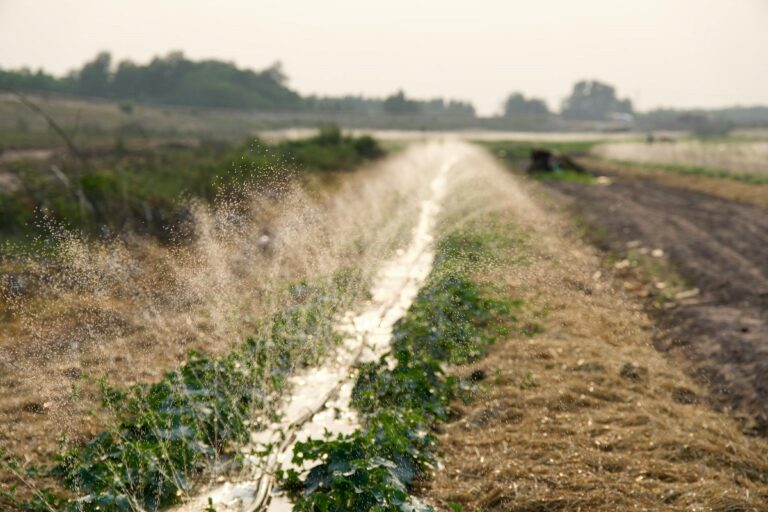
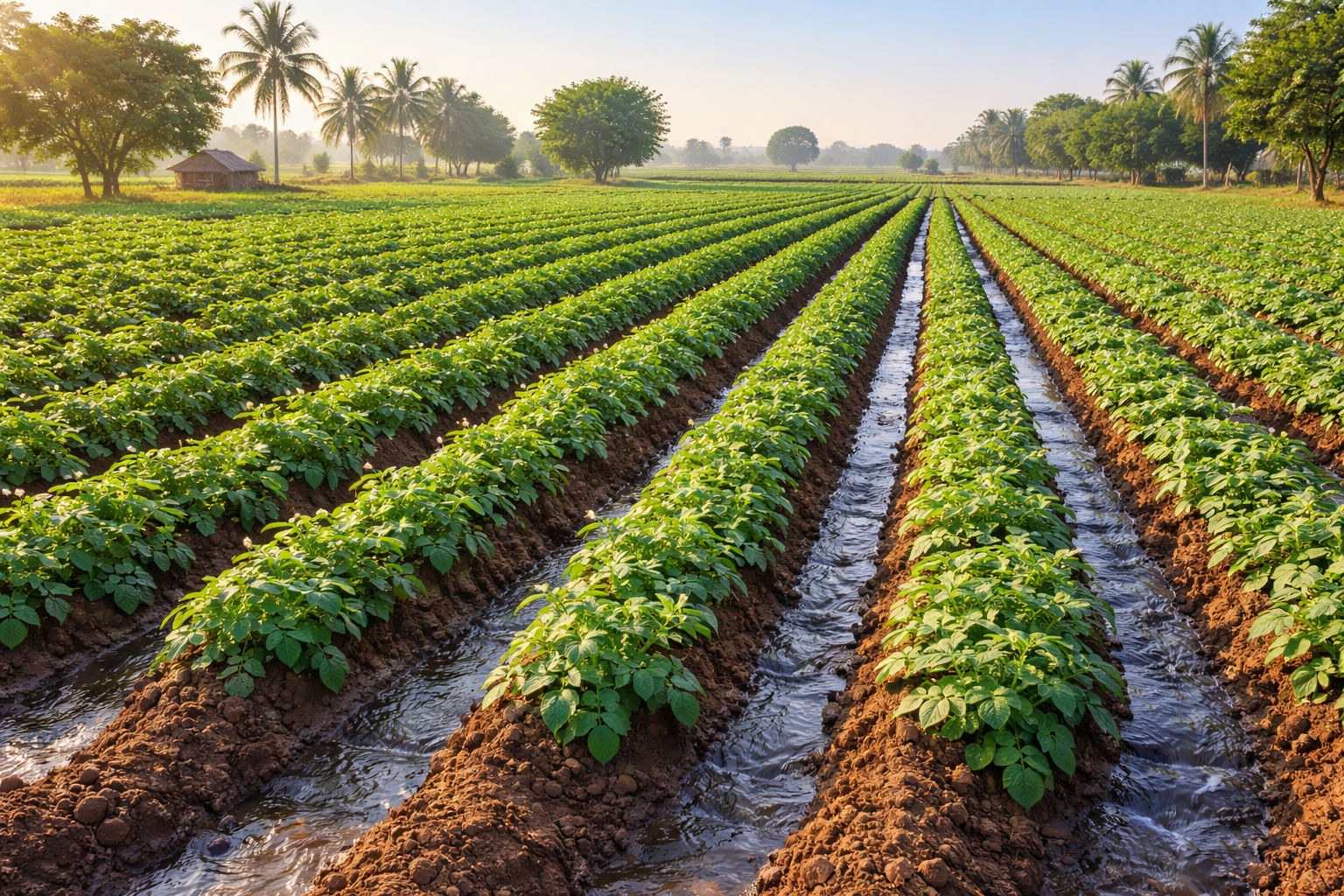
Furrow irrigation is the most commonly used method in potato cultivation. Water flows through furrows between ridges where potatoes are planted.
- Simple and cost-effective
- Reduces water contact with tubers
- Helps prevent diseases
Sprinkler Irrigation
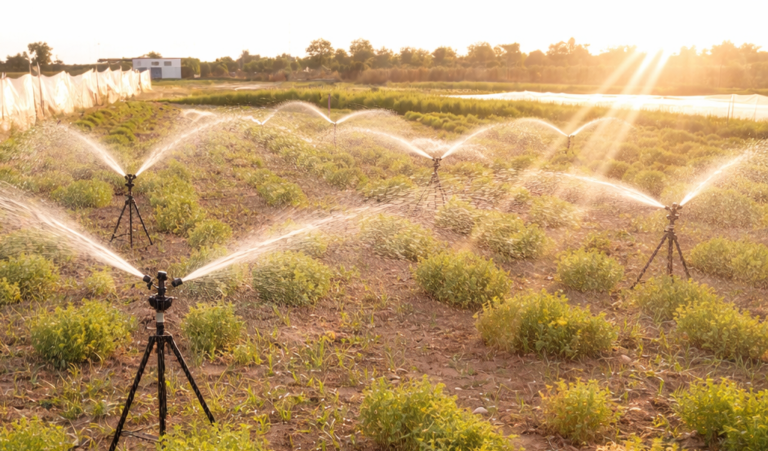
Sprinkler irrigation provides uniform water distribution and is suitable for sandy soils and uneven land. It helps maintain consistent soil moisture.
Drip Irrigation
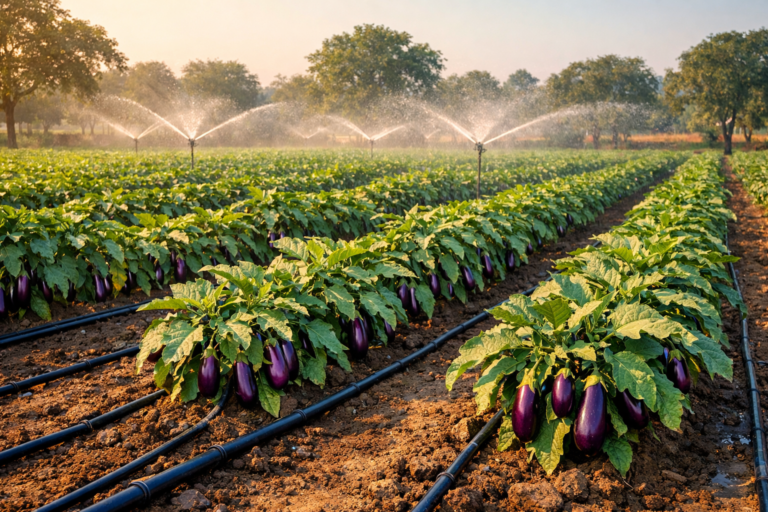
Drip irrigation is highly efficient and delivers water directly to the root zone. It reduces water wastage and improves water-use efficiency.
Drip systems also allow fertigation, improving nutrient availability and crop growth.
Drainage Management in Potato Fields
Potato is highly sensitive to waterlogging. Excess water can lead to root rot, tuber diseases, and reduced yield.
Proper drainage management includes:
- Planting on raised ridges
- Ensuring proper field leveling
- Avoiding excessive irrigation
- Providing drainage channels in heavy soils
Good drainage helps maintain soil aeration and supports healthy tuber development.
Impact of Irrigation on Potato Yield
Timely irrigation significantly influences potato yield and quality. Moisture stress during tuber initiation and development stages can reduce tuber number and size.
Studies show that proper irrigation management can increase potato yield by 30–50 percent compared to poorly irrigated crops.
Water-Saving Techniques in Potato Farming
- Use mulching to conserve soil moisture
- Adopt drip irrigation for efficient water use
- Practice proper ridge and furrow planting
- Monitor soil moisture regularly
- Apply irrigation during cooler hours
These practices help reduce water wastage and improve irrigation efficiency.
Common Irrigation Mistakes in Potato Cultivation
- Over-irrigation leading to waterlogging
- Irregular irrigation is causing tuber cracking
- Skipping irrigation during tuber initiation
- Poor drainage management
Avoiding these mistakes helps maintain consistent crop growth and better yield.
Seasonal Irrigation Considerations
Potatoes are mainly grown during the Rabi season in India. However, it is also cultivated in other seasons in certain regions. Irrigation frequency should be adjusted based on temperature, rainfall, and soil moisture.
In cooler climates, irrigation intervals may be longer, while in warmer regions, more frequent irrigation is required.
FAQs on Irrigation for Potato
How much water does a potato require?
Potatoes generally require about 500–700 mm of water during their entire growing period.
Which stage is most critical for irrigation in potatoes?
Tuber initiation and tuber development stages are the most critical.
How often should potatoes be irrigated?
Potatoes are usually irrigated every 7–10 days, depending on soil and climate.
Is the potato sensitive to waterlogging?
Yes, potatoes are highly sensitive to waterlogging and require well-drained soil.
What irrigation method is best for potatoes?
Furrow irrigation is commonly used, while drip irrigation is the most efficient.
Should irrigation be stopped before harvest?
Yes, irrigation should be stopped 10–15 days before harvesting.
Does irrigation affect potato quality?
Yes, proper irrigation improves tuber size, shape, and overall quality.
Conclusion
Efficient irrigation management is essential for successful potato cultivation. As a shallow-rooted crop, potatoes require consistent soil moisture, especially during tuber initiation and development stages. Both moisture stress and excess water can negatively impact yield and tuber quality.
By applying irrigation at the right time, maintaining proper drainage, and adopting efficient irrigation methods such as drip or furrow systems, farmers can achieve higher yields and better-quality produce. Proper water management not only improves productivity but also ensures sustainable potato farming.