Irrigation for Barley: Complete Water Management Guide for Higher Yield
Irrigation for Barley plays a crucial role in ensuring stable production, especially in regions where winter rainfall is uncertain. Barley is one of the oldest cultivated cereal crops in India and is mainly grown during the Rabi season. It is widely used for animal feed, malt production, food products, and fodder. Compared to wheat, barley is more tolerant to drought and salinity, but timely irrigation at critical stages significantly improves yield and grain quality.
In many semi-arid and arid regions, barley is preferred because it requires less water than other cereals. However, this does not mean irrigation can be ignored. Strategic water application helps in better tillering, spike development, and grain filling. Understanding the water requirement and irrigation schedule of barley is essential for maximizing productivity.
Importance of Irrigation in Barley Cultivation
Barley is often grown under limited irrigation or even rainfed conditions. Still, when supplemental irrigation is available, yields improve substantially. Proper irrigation management ensures uniform crop establishment and enhances nutrient uptake.
Key benefits of proper irrigation for barley include:
- Uniform seed germination
- Better tiller formation
- Improved spike length and grain number
- Higher test weight
- Reduced moisture stress during reproductive stages
Even though barley can tolerate moderate drought, prolonged moisture stress during flowering and grain formation can reduce yield significantly.
Water Requirement of Barley
The total water requirement of barley generally ranges between 300 mm and 450 mm, depending on soil type, climate, and crop duration. This requirement is lower than wheat, making barley suitable for water-scarce areas.
Factors influencing water requirement include:
- Temperature and evaporation rate
- Soil texture and water-holding capacity
- Duration and variety of barley
- Time of sowing
In lighter soils, more frequent irrigation may be necessary, while heavy soils retain moisture longer and require fewer irrigations.
Critical Growth Stages for Irrigation in Barley
Although barley can withstand limited moisture, certain growth stages are highly sensitive to water stress. Irrigation during these stages ensures better yield.
Crown Root Initiation (CRI) Stage (20–25 Days After Sowing)
This is the most critical stage for irrigation in barley. Adequate moisture at CRI promotes strong root development and better tiller formation. If irrigation is skipped at this stage, yield reduction is likely.
Tillering Stage (30–40 Days After Sowing)
During tillering, the plant develops additional shoots. Moisture availability supports healthy vegetative growth and increases the number of productive tillers.
Booting and Heading Stage (60–75 Days After Sowing)
At this stage, the spike develops inside the leaf sheath. Moisture stress during booting affects spike formation and reduces grain number per spike.
Milking and Grain Filling Stage (80–100 Days After Sowing)
During grain filling, proper soil moisture ensures better grain weight and quality. Moisture stress during this stage results in shriveled grains and lower market value.
Number of Irrigations Required
The number of irrigations depends on rainfall and soil conditions. Generally:
- Rainfed conditions: 0–1 irrigation (if rainfall is adequate)
- Limited irrigation: 1–2 irrigations (CRI and booting stages)
- Assured irrigation: 3–4 irrigations (CRI, tillering, booting, and grain filling)
If water availability is limited, priority should always be given to the CRI stage.
Methods of Irrigation for Barley
Flood Irrigation
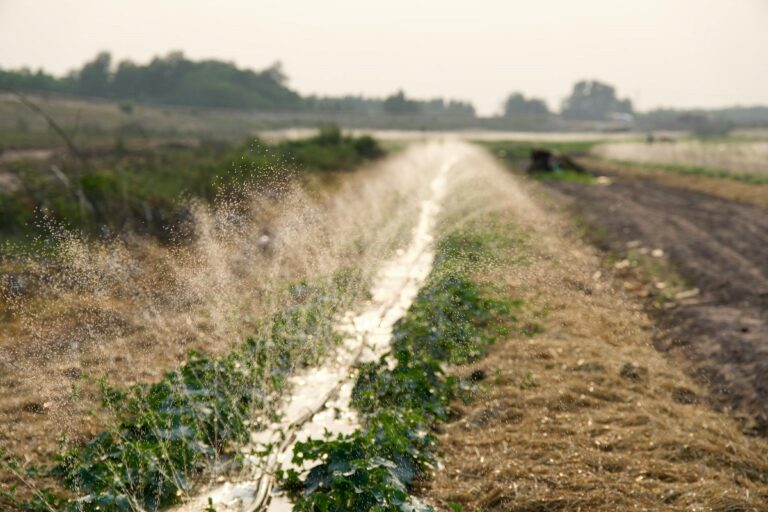
Flood irrigation is commonly practiced in traditional barley-growing regions. However, excessive flooding should be avoided to prevent waterlogging.
Furrow Irrigation
Furrow irrigation is more efficient than flood irrigation. Water flows between crop rows, reducing water wastage and minimizing direct contact with plant stems.
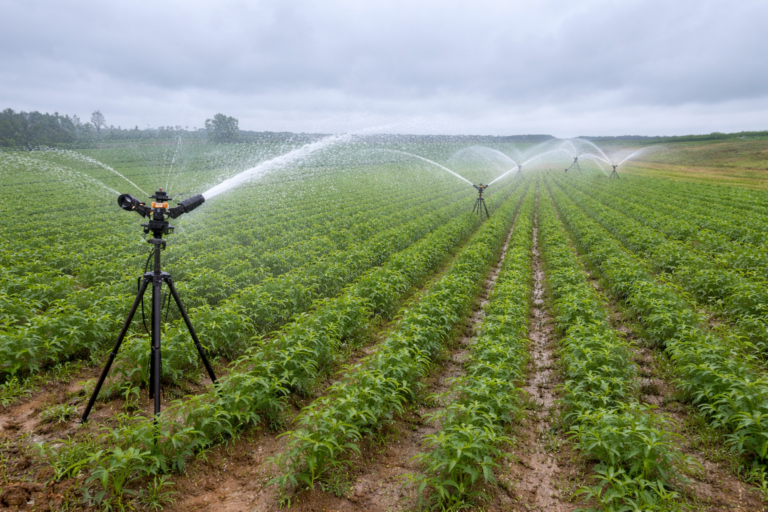
Sprinkler Irrigation
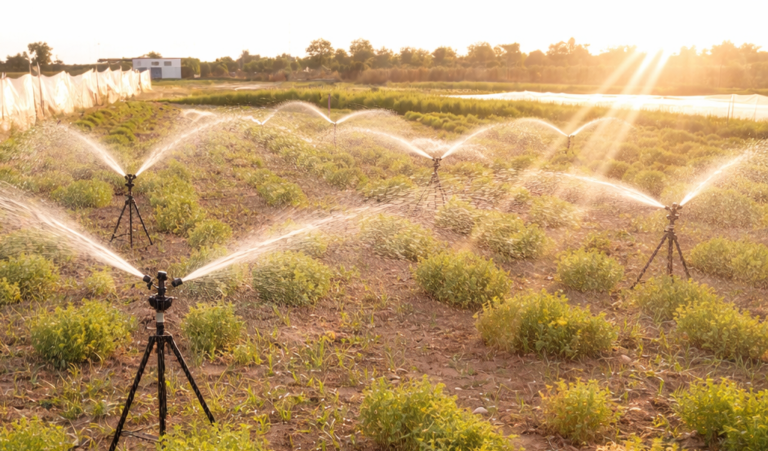
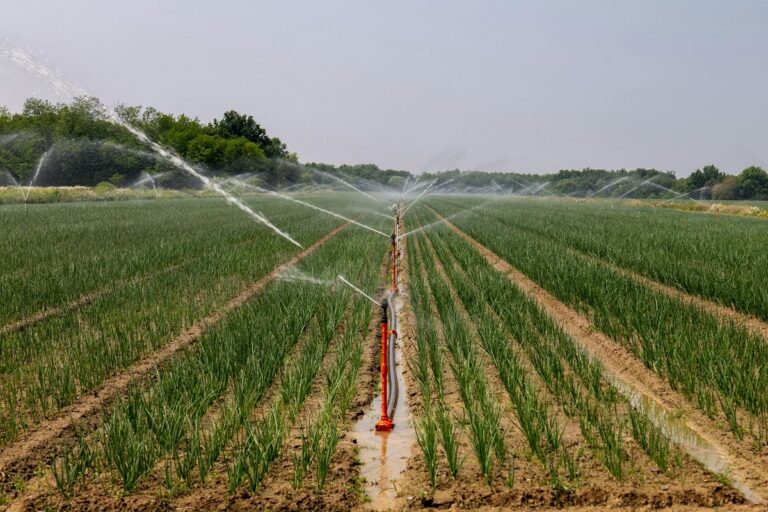
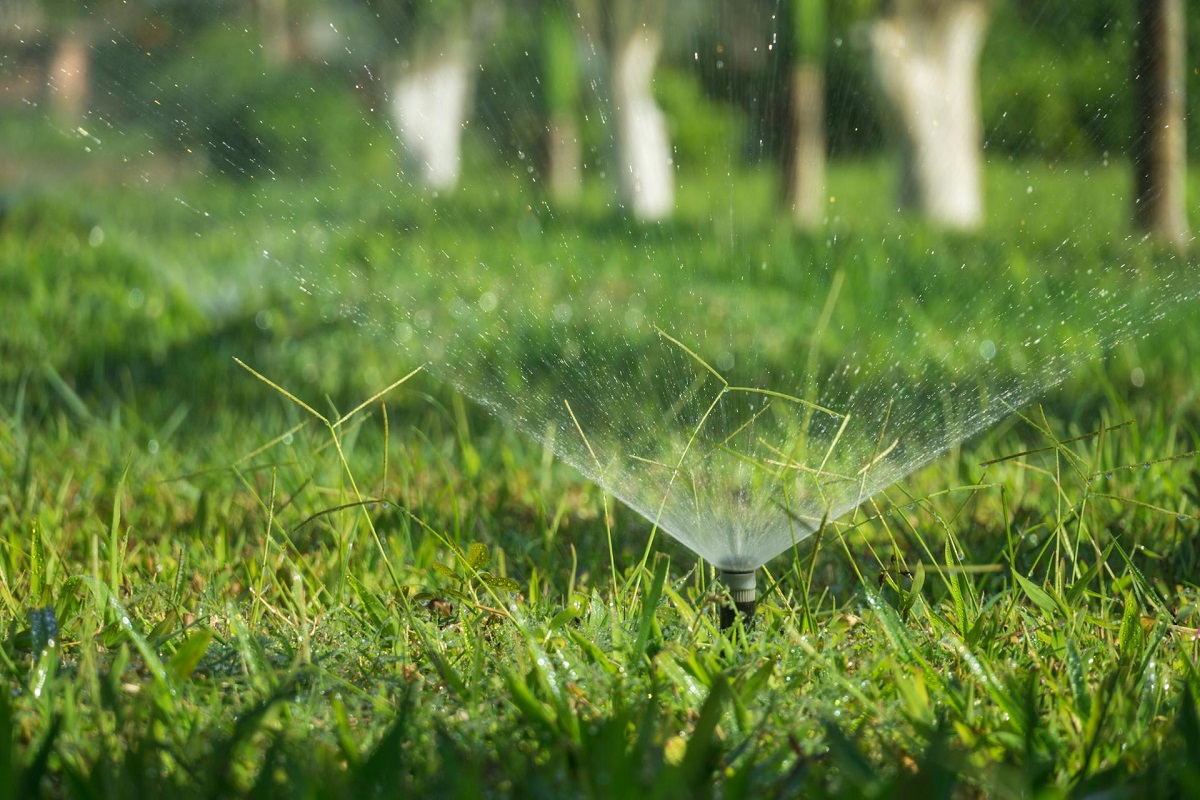
Sprinkler systems are suitable for sandy soils and uneven land. They provide uniform water distribution and reduce soil erosion.
Advantages include:
- Efficient water use
- Better control over irrigation depth
- Suitable for light-textured soils
Drip Irrigation
Although not widely used for barley, drip irrigation can be adopted in water-scarce regions. It improves water-use efficiency and supports precise moisture management.
Drainage Considerations in Barley Fields
Barley is more tolerant to salinity compared to wheat, but it is sensitive to prolonged waterlogging. Standing water for more than 48 hours can damage roots and reduce plant growth.
To ensure proper drainage:
- Maintain proper field leveling
- Provide drainage channels in heavy soils
- Avoid over-irrigation during cloudy weather
Well-drained soils promote healthier root systems and efficient nutrient uptake.
Impact of Irrigation on Yield and Grain Quality
Timely irrigation increases spike length, number of grains per spike, and grain weight. For malting barley, proper irrigation ensures uniform grain size and better quality parameters.
Moisture stress during grain filling can reduce test weight and affect market price. Therefore, even though barley requires less water, proper scheduling directly impacts profitability.
Water-Saving Techniques in Barley Farming
- Laser land leveling for uniform distribution
- Mulching to reduce evaporation losses
- Alternate furrow irrigation
- Use of drought-tolerant varieties
- Soil moisture monitoring before irrigation
These practices help conserve water while maintaining yield levels.
Common Irrigation Mistakes in Barley Cultivation
- Skipping irrigation at the CRI stage
- Over-irrigating in heavy soils
- Poor drainage management
- Applying excessive water during late grain filling
Avoiding these mistakes ensures better crop performance and stable yield.
Irrigation Scheduling Based on Soil Type
Sandy Soils
Require frequent but light irrigation due to low water-holding capacity.
Loamy Soils
Ideal for barley cultivation, requiring moderate irrigation intervals.
Clay Soils
Retain moisture longer but require proper drainage to prevent waterlogging.
Role of Irrigation in Nutrient Uptake
Balanced irrigation improves nutrient absorption, especially nitrogen. Excess irrigation can cause nitrogen leaching, reducing fertilizer efficiency. Proper water management enhances nutrient use efficiency and lowers input costs.
Climate Considerations for Irrigation in Barley
Barley is grown during cooler months, which reduces evaporation compared to summer crops. However, rising temperatures during the late Rabi season may increase irrigation requirements during grain filling.
Monitoring weather forecasts helps in adjusting irrigation schedules and preventing unnecessary water application.
FAQs on Irrigation for Barley
How many irrigations are required for barley?
Barley generally requires 1–4 irrigations depending on rainfall and soil type.
Which stage is most critical for irrigation in barley?
The Crown Root Initiation (CRI) stage is the most critical stage for irrigation.
Can barley be grown under rainfed conditions?
Yes, barley can be grown under rainfed conditions, but supplemental irrigation improves yield.
Is barley tolerant to drought?
Barley is relatively drought-tolerant compared to wheat, but still benefits from timely irrigation.
Does waterlogging affect barley?
Yes, prolonged waterlogging damages roots and reduces plant growth.
What is the total water requirement of barley?
Barley requires approximately 300–450 mm of water during its growth cycle.
Is sprinkler irrigation suitable for barley?
Yes, sprinkler irrigation is suitable, especially in sandy soils and uneven fields.
Should irrigation be stopped before harvest?
Yes, irrigation should be stopped as the crop approaches maturity to allow proper grain drying.
Conclusion
Irrigation for Barley requires careful planning despite the crop’s relatively low water requirement. Strategic irrigation at critical stages such as Crown Root Initiation, booting, and grain filling significantly enhances yield and grain quality. Over-irrigation should be avoided to prevent waterlogging and nutrient loss.
By adopting efficient irrigation methods, maintaining proper drainage, and scheduling water application according to soil and climate conditions, farmers can achieve stable production while conserving valuable water resources. With proper management, barley remains a reliable and profitable crop for regions facing water constraints.