Irrigation for Wheat in India: Practices, Scheduling, and Yield Management
Irrigation for wheat is one of the most critical factors determining yield, grain quality, and farm profitability in India. Wheat is a rabi crop grown during the winter season, when rainfall is limited and uncertain. Unlike kharif crops that benefit from the monsoon, wheat depends largely on timely and well-managed irrigation to complete its growth cycle successfully.
India is one of the world’s largest producers of wheat, and the crop plays a central role in national food security. States such as Uttar Pradesh, Punjab, Haryana, Madhya Pradesh, Rajasthan, and Bihar contribute a major share of total production. In most of these regions, irrigation for wheat decides whether the crop performs at an average level or achieves high productivity.
Importance of Proper Irrigation for Wheat
Wheat has a relatively shallow root system and is sensitive to both moisture stress and excess water. Insufficient irrigation can reduce tillering, shorten spike length, and lower grain weight. On the other hand, over-irrigation can lead to lodging, nutrient loss, and increased disease incidence.
Proper irrigation ensures uniform germination, healthy vegetative growth, effective flowering, and proper grain filling. It also improves fertilizer use efficiency, as nutrients are absorbed more effectively when soil moisture is maintained at optimal levels.
In areas with assured irrigation, wheat yields are significantly higher compared to rainfed or poorly irrigated fields. This makes irrigation management a key skill for wheat farmers.
Water Requirement of Wheat Crop
The total water requirement of wheat varies depending on climate, soil type, variety, and duration of the crop. On average, wheat requires about 450 to 650 mm of water during its entire growing period.
Light soils with low water-holding capacity require more frequent irrigation, while heavy soils retain moisture for longer periods. Cooler temperatures during the rabi season reduce evaporation losses, but dry winds and rising temperatures toward maturity increase water demand.
Critical Stages of Irrigation for Wheat
Irrigation for wheat is most effective when applied at specific growth stages. Missing irrigation at these critical stages can cause irreversible yield loss.
Crown Root Initiation (CRI) Stage
The CRI stage, occurring about 20–25 days after sowing, is the most critical stage for irrigation in wheat. At this stage, secondary roots develop, which determine the plant’s ability to absorb water and nutrients.
If irrigation is delayed or skipped at the CRI stage, tiller formation is reduced, leading to fewer productive spikes. Farmers consider this irrigation more important than any other during the crop cycle.
Tillering Stage
The tillering stage follows CRI and involves the formation of side shoots. Adequate soil moisture at this stage supports strong tiller development and uniform plant stand.
In moisture-deficient soils, irrigation at this stage helps maintain plant vigor.
Jointing Stage
During jointing, the stem begins to elongate and the developing ear moves upward. Water stress at this stage can reduce spike length and grain number.
Irrigation at jointing is particularly important in light-textured soils.
Flowering Stage
Flowering is a sensitive stage where moisture stress can cause pollen sterility and poor grain set. Even short periods of drought during flowering can significantly reduce yield.
Ensuring adequate irrigation at this stage helps achieve uniform flowering and better grain formation.
Grain Filling (Milking and Dough) Stage
During grain filling, water supports the transfer of nutrients to developing grains. Moisture stress results in shriveled grains and reduced test weight.
The final irrigation is usually applied at the dough stage, after which irrigation is stopped to allow proper maturity.
Number of Irrigations Required for Wheat
The number of irrigations for wheat depends on soil type, climate, and irrigation method. Under typical north Indian conditions:
- Light soils may require 5–6 irrigations
- Medium soils usually need 4–5 irrigations
- Heavy soils can perform well with 3–4 irrigations
In areas with limited water availability, farmers should always prioritize the CRI stage, followed by the flowering and grain-filling stages.
Methods of Irrigation for Wheat
Farmers use different irrigation methods for wheat cultivation across India, depending on the water source and field conditions.
Surface Irrigation
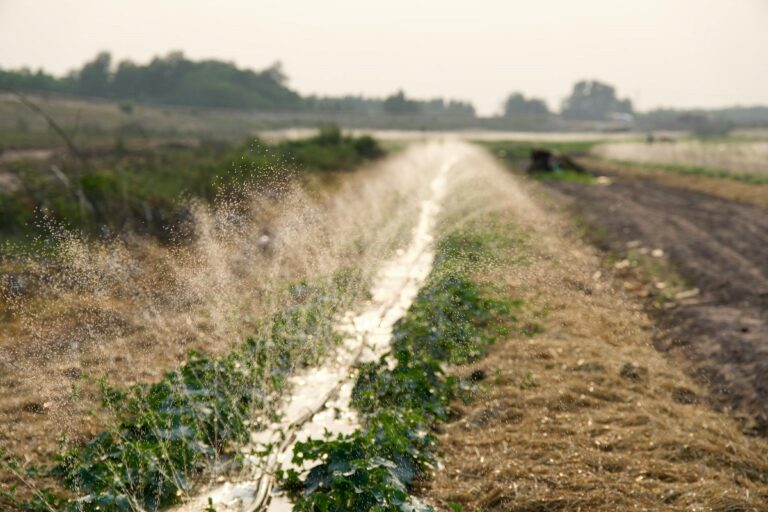
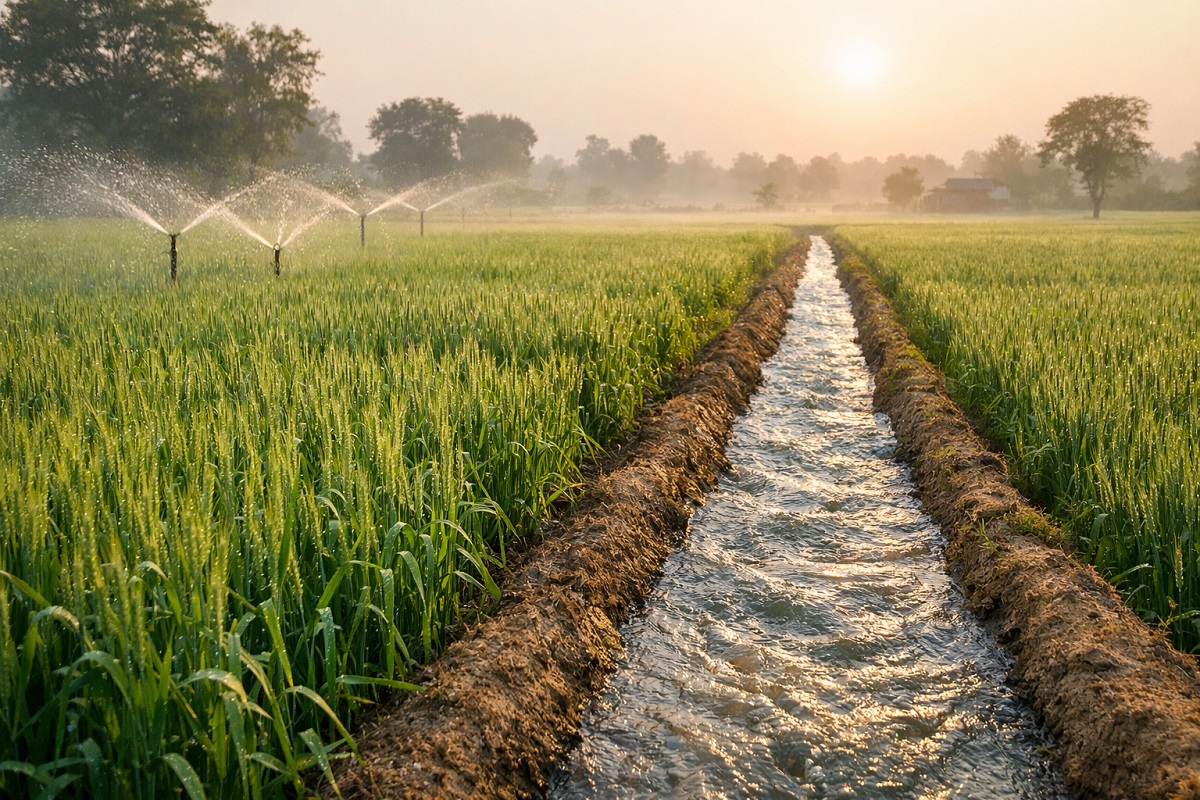
Farmers commonly use surface irrigation through flood or border strip methods for wheat. They allow water to flow across the field in a controlled manner.
Although simple and cost-effective, surface irrigation can cause uneven water distribution if farmers do not level the land properly.
Check Basin Irrigation
In check basin irrigation, farmers divide the field into small plots surrounded by bunds. This method gives better control over water application and reduces runoff.
It is suitable for small fields and areas with limited water supply.
Sprinkler Irrigation
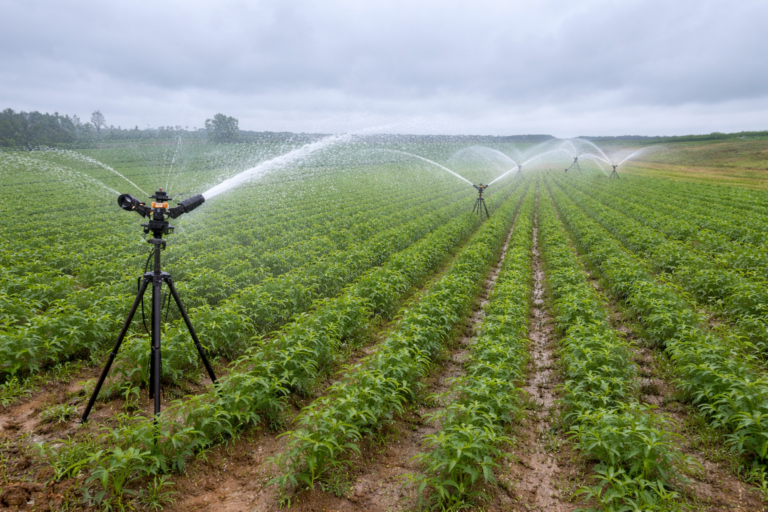
Sprinkler irrigation is gaining popularity for wheat in water-scarce regions. It applies water uniformly and reduces water losses.
Sprinklers are especially useful in sandy soils and undulating land but require higher initial investment.
Drip Irrigation
Drip irrigation for wheat is still limited but shows promise in conserving water. Drip systems deliver water directly to the root zone, reducing evaporation losses.
This method is more suitable for experimental and high-efficiency farming systems rather than traditional large-scale wheat fields.
Soil Moisture Management for Wheat
Maintaining optimum soil moisture is as important as the number of irrigations. Excess moisture reduces oxygen availability to roots, while moisture stress slows growth.
Practices such as proper land leveling, timely irrigation, and avoiding water stagnation help maintain a healthy root environment.
Impact of Irrigation on Fertilizer Use
Irrigation and fertilizer application are closely linked in wheat cultivation. Nitrogen uptake is highest when soil moisture is adequate.
Applying irrigation soon after fertilizer application improves nutrient availability and reduces losses. Poor irrigation management can result in nutrient leaching and reduced fertilizer efficiency.
Common Irrigation-Related Problems in Wheat
- Skipping CRI stage irrigation due to water shortage
- Over-irrigation leading to lodging
- Waterlogging in poorly drained soils
- Uneven irrigation due to improper leveling
Addressing these issues through better planning and field preparation can significantly improve yields.
Irrigation Scheduling Under Limited Water Conditions
In water-scarce areas, strategic irrigation scheduling becomes essential. Farmers should prioritize critical stages and avoid unnecessary irrigations during less sensitive growth phases.
Using soil moisture indicators and observing crop condition can help decide irrigation timing more accurately than fixed calendars.
FAQs on Irrigation for Wheat
Which is the most important irrigation stage for wheat?
The crown root initiation (CRI) stage is the most important irrigation stage for wheat.
How many irrigations does wheat need?
Wheat generally needs 4–6 irrigations, depending on soil type and climate.
Can you grow wheat with limited irrigation?
Yes, but farmers must prioritize critical growth stages to avoid yield loss.
Is sprinkler irrigation suitable for wheat?
Yes, sprinkler irrigation is suitable and helps save water, especially in light soils.
What happens if wheat is over-irrigated?
Over-irrigation can cause lodging, nutrient loss, and increased disease risk.
Does irrigation timing affect grain quality?
Yes, proper irrigation during grain filling improves grain weight and quality.
Should you stop irrigation before harvest?
Yes, growers usually stop irrigation after the dough stage to allow proper maturity.
Conclusion
Irrigation for wheat is not just about supplying water but about supplying it at the right time and in the right amount. Timely irrigation at critical growth stages plays a decisive role in determining yield and grain quality.
As water resources become increasingly stressed, efficient irrigation management will be essential for sustaining wheat production in India. By understanding crop water requirements, choosing suitable irrigation methods, and avoiding common mistakes, farmers can achieve stable yields while conserving valuable water resources.