Irrigation for Green Gram (Moong): Water Management for Healthy Growth and Higher Yield
Green gram, commonly known as moong, is an important pulse crop widely grown in tropical and subtropical regions. It is valued for its high protein content, short crop duration, and ability to improve soil fertility through nitrogen fixation. Although green gram is generally cultivated under rainfed conditions, proper irrigation management can significantly improve plant growth, pod development, and overall yield.
Green gram is relatively drought-tolerant but highly sensitive to moisture stress during certain growth stages. Therefore, providing timely irrigation at critical stages helps ensure better crop establishment and grain production.
Importance of Irrigation in Green Gram Cultivation
Green gram has a moderately shallow root system, which means it depends on sufficient soil moisture in the upper soil layers. Inadequate moisture during key growth stages can result in poor flowering, reduced pod formation, and smaller grain size.
Efficient irrigation in green gram farming helps in:
- Ensuring uniform germination and crop establishment
- Promoting vigorous vegetative growth
- Improving flowering and pod setting
- Enhancing seed filling and grain quality
- Reducing yield losses caused by drought stress
Water Requirement of Green Gram
Green gram generally requires around 300 mm to 450 mm of water during its entire growing period. The actual water requirement depends on factors such as soil type, climatic conditions, crop duration, and rainfall distribution.
Factors affecting the water requirement include:
- Soil texture and water-holding capacity
- Season of cultivation (Kharif, Rabi, or summer)
- Temperature and evaporation rate
- Rainfall during the crop season
In many regions, green gram grown during the monsoon season may not require additional irrigation if rainfall is adequate.
Critical Growth Stages for Irrigation in Green Gram
Providing irrigation during the crop’s most sensitive growth stages ensures better yield and crop stability.
Germination and Seedling Stage (0–15 Days)
Adequate soil moisture at sowing is necessary for proper seed germination and seedling establishment. If soil moisture is insufficient, a light pre-sowing irrigation may be applied.
Branching Stage (20–30 Days)
Moisture during the branching stage supports vegetative growth and increases the number of productive branches.
Flowering Stage (30–40 Days)
This is the most critical stage for irrigation in green gram cultivation. Water stress during flowering can cause flower drop and significantly reduce pod formation.
Pod Development Stage (40–55 Days)
Adequate soil moisture during pod development helps ensure proper seed filling and improves grain size and quality.
Number of Irrigations Required
The number of irrigations required for green gram varies depending on seasonal conditions:
- Rainfed Kharif crop: Usually no irrigation if rainfall is sufficient
- Limited irrigation conditions: 1 irrigation at the flowering stage
- Summer cultivation: 3–5 irrigations at regular intervals
In summer crops, irrigation intervals are generally 10–12 days, depending on soil moisture and weather conditions.
Methods of Irrigation for Green Gram
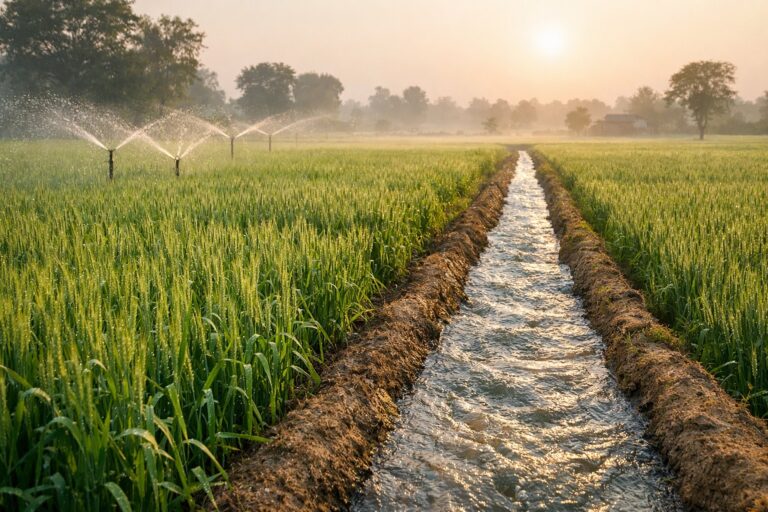
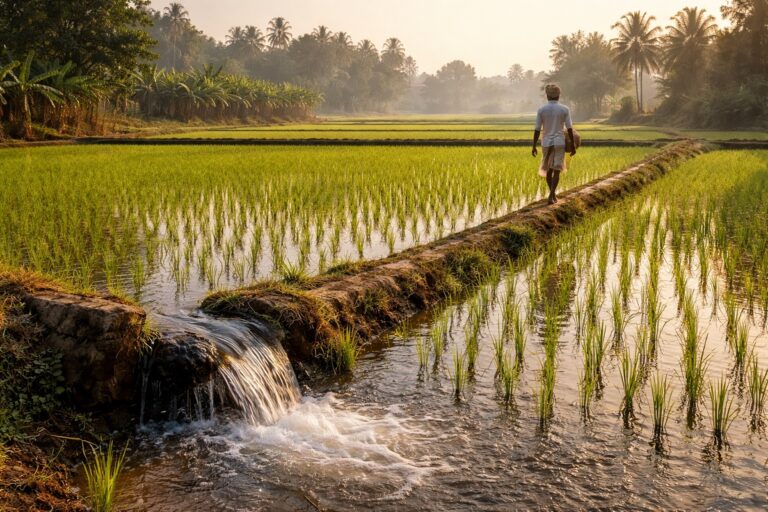
Furrow Irrigation
Furrow irrigation is commonly used in green gram cultivation. Water flows through furrows between crop rows, allowing gradual infiltration into the root zone.
- Reduces water wastage
- Prevents waterlogging
- Ensures efficient water use
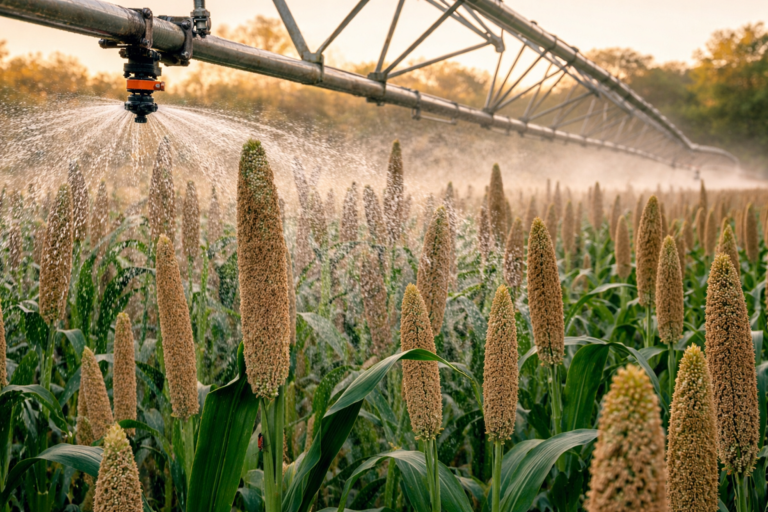
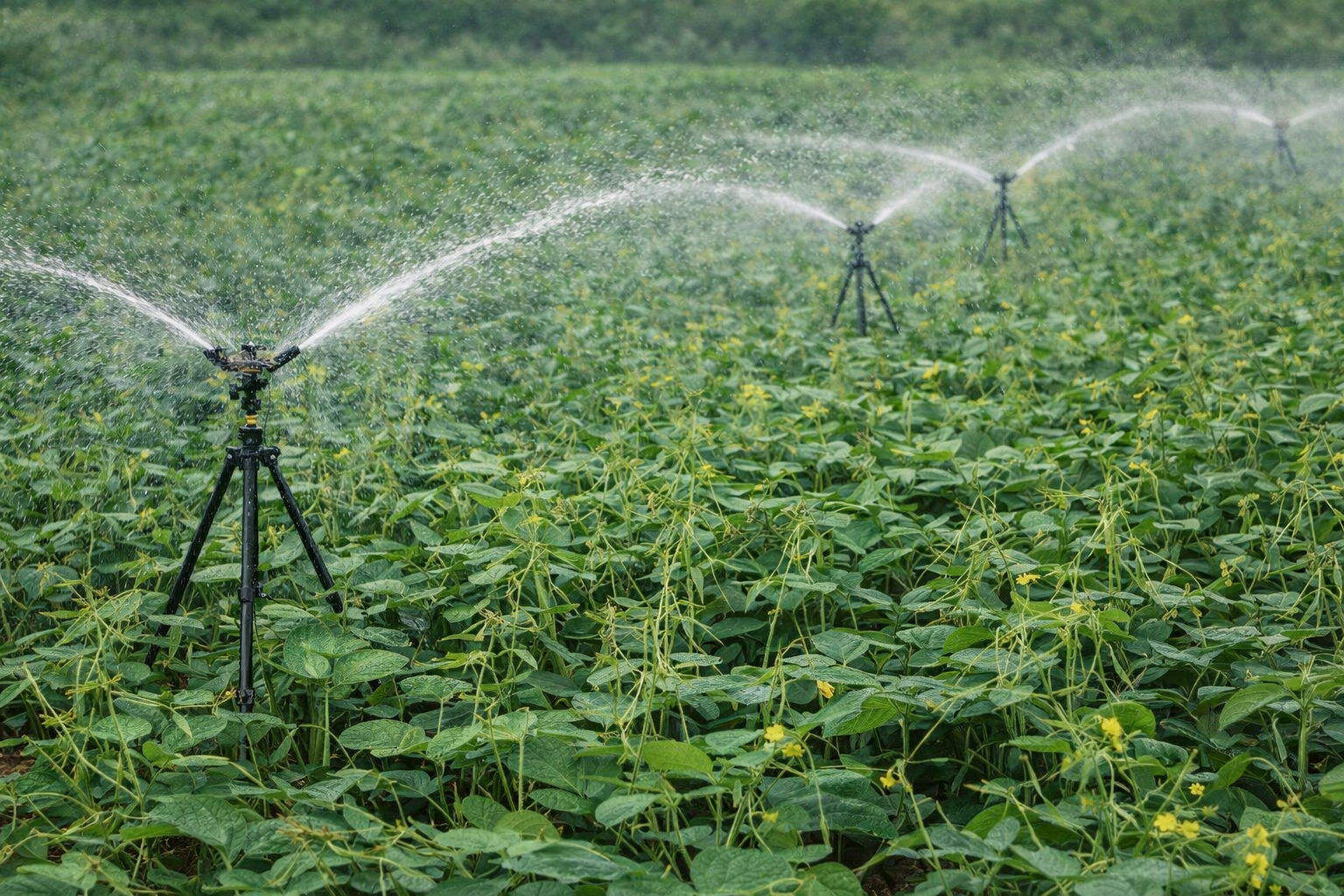
Sprinkler Irrigation
Sprinkler irrigation is suitable for light soils and uneven land. It distributes water evenly across the field and reduces runoff.
Drip Irrigation
Drip irrigation is highly efficient in water-scarce regions. It delivers water directly to the plant root zone, reducing evaporation losses and improving water-use efficiency.
Drainage Management
Although green gram tolerates short dry periods, it is sensitive to waterlogging. Excess moisture can damage roots and increase the risk of fungal diseases.
To ensure proper drainage:
- Avoid over-irrigation
- Maintain proper field leveling
- Provide drainage channels in heavy soils
- Avoid irrigation during rainy weather
Impact of Proper Irrigation on Yield
Timely irrigation improves plant growth, pod formation, and grain filling. Moisture stress during the flowering and pod development stages can significantly reduce yield.
Studies show that providing irrigation at critical stages can increase green gram yield by 20–35 percent compared to crops grown entirely under moisture stress.
Water-Saving Practices for Green Gram Farming
- Use of mulching to reduce soil moisture loss
- Laser land leveling for uniform water distribution
- Adoption of short-duration varieties
- Monitoring soil moisture before irrigation
- Irrigating during early morning or evening hours
Common Irrigation Mistakes in Green Gram Cultivation
- Over-irrigation leading to waterlogging
- Skipping irrigation during the flowering stage
- Applying irrigation during crop maturity
- Poor drainage management
Avoiding these mistakes helps maintain healthy plant growth and stable yield.
Climate Considerations for Green Gram Irrigation
Green gram is grown in different seasons, such as Kharif, Rabi, and summer. Irrigation requirements vary depending on the season and climatic conditions.
Summer crops generally require more frequent irrigation due to higher temperatures and faster evaporation, whereas monsoon crops may rely mainly on rainfall.
FAQs on Irrigation for Green Gram
How much water does green gram require?
Green gram generally requires around 300–450 mm of water throughout its growing period.
Which stage is most critical for irrigation in green gram?
The flowering stage is the most critical stage for irrigation.
How many irrigations are required for summer green gram?
Summer green gram usually requires 3–5 irrigations, depending on soil and climatic conditions.
Is green gram sensitive to waterlogging?
Yes, green gram is sensitive to waterlogging and requires well-drained soil.
Can green gram be grown under rainfed conditions?
Yes, green gram is commonly grown under rainfed conditions during the Kharif season.
Should irrigation be stopped before harvest?
Yes, irrigation should be stopped during the maturity stage to allow proper drying of pods for harvesting.
Conclusion
Irrigation for green gram (moong) should focus on timely water application rather than frequent watering. Although the crop can tolerate mild drought conditions, moisture stress during flowering and pod development can significantly reduce yield.
By applying irrigation at critical growth stages, maintaining proper drainage, and adopting water-efficient irrigation methods, farmers can improve green gram productivity while conserving water resources.