Irrigation for Lentil: Efficient Water Management for Higher Yield
Lentil is one of the most important pulse crops cultivated during the Rabi season in many parts of the world, particularly in South Asia. Known for its high protein content and soil-enriching nitrogen fixation ability, lentil plays a significant role in sustainable farming systems. Although lentils are generally grown under rainfed conditions, proper irrigation management can significantly enhance yield, seed quality, and crop stability.
Lentil is moderately drought-tolerant, but moisture stress during certain growth stages can reduce plant growth and pod formation. Strategic irrigation at critical stages helps ensure optimal crop development and better grain production.
Importance of Irrigation in Lentil Cultivation
Lentil plants have a relatively shallow root system compared to some other pulse crops. Because of this, they depend on adequate soil moisture in the upper soil layers. When moisture levels drop during sensitive growth stages, flower drop and poor pod development may occur.
Proper irrigation management in lentil farming helps in:
- Ensuring uniform seed germination
- Promoting healthy vegetative growth
- Improving flowering and pod formation
- Increasing grain size and yield
- Reducing the risk of crop failure during dry spells
Water Requirement of Lentil
Lentil generally requires about 250 mm to 350 mm of water during its entire growth period. The actual requirement depends on soil type, climate conditions, crop duration, and rainfall received during the season.
Factors influencing lentil water requirement include:
- Soil moisture at sowing
- Temperature and evaporation rate
- Soil texture and water-holding capacity
- Length of growing season
Since lentil is mostly grown during winter when evaporation rates are lower, the crop typically requires fewer irrigations compared to many other field crops.
Critical Growth Stages for Irrigation in Lentil
Providing irrigation at the right growth stage is essential for maximizing yield. Lentil plants are particularly sensitive to moisture stress during reproductive stages.
Germination Stage (0–15 Days)
Adequate soil moisture is required for proper seed germination and early seedling establishment. If soil moisture is insufficient at sowing time, a light pre-sowing irrigation may be applied.
Branching Stage (25–30 Days)
Moisture during branching supports vegetative growth and helps the plant develop more productive branches.
Flowering Stage (45–60 Days)
This is the most critical stage for irrigation in lentil cultivation. Moisture stress during flowering can lead to heavy flower drop and reduced pod formation.
Pod Development Stage (65–85 Days)
Adequate moisture during pod formation ensures proper seed filling and improves grain size and quality.
Number of Irrigations Required
The number of irrigations depends largely on soil moisture conditions and rainfall:
- Rainfed areas: Often, no irrigation is required if residual soil moisture is sufficient
- Limited irrigation conditions: 1 irrigation at the flowering stage
- Irrigated conditions: 2 irrigations (flowering and pod development stages)
Over-irrigation should be avoided because lentil plants are sensitive to excess moisture and waterlogging.
Methods of Irrigation for Lentil
Furrow Irrigation
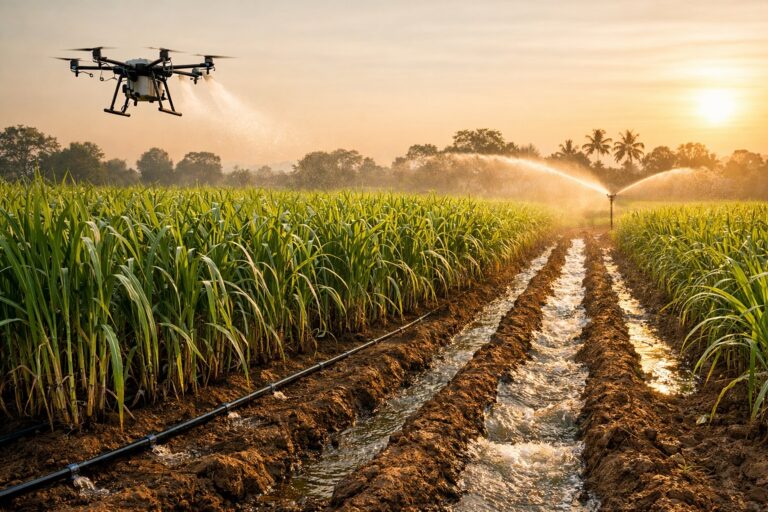
Furrow irrigation is commonly used in lentil fields. Water flows between crop rows and gradually infiltrates into the root zone.
- Reduces water wastage
- Minimizes waterlogging
- Improves water distribution
Border Strip Irrigation
This method is suitable for large, level fields. Water is allowed to flow across the field in strips, ensuring uniform distribution.
Sprinkler Irrigation
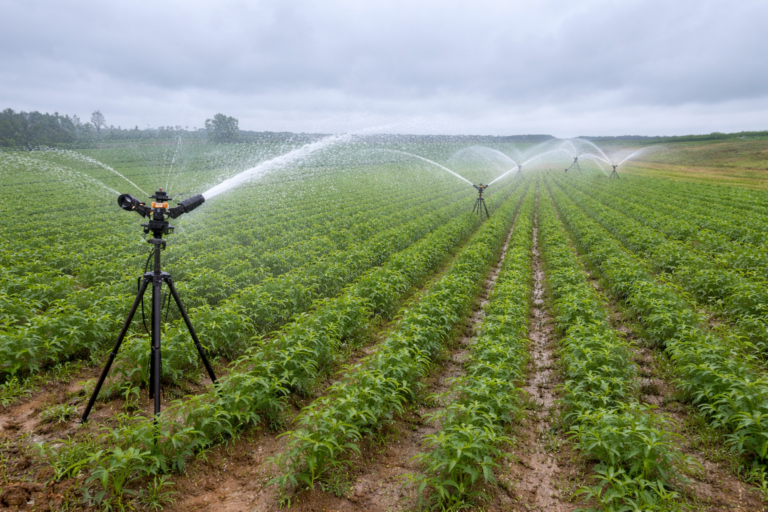
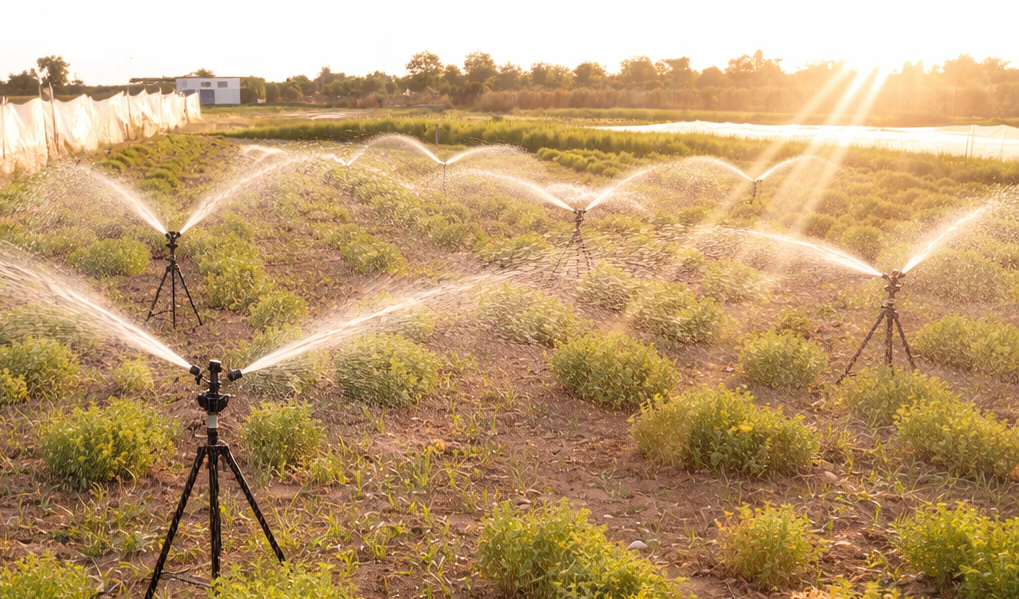
Sprinkler systems are useful in sandy soils and uneven terrain. They provide controlled and uniform irrigation across the field.
Drip Irrigation
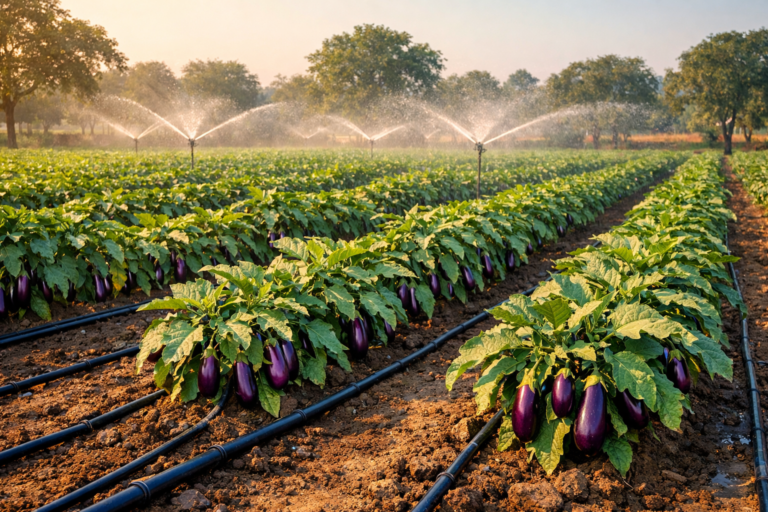
Although less common for lentil, drip irrigation can be beneficial in water-scarce areas as it delivers water directly to the plant root zone, improving efficiency.
Drainage Management
Lentil plants are very sensitive to waterlogging. Standing water can damage roots and encourage fungal diseases such as root rot.
To ensure proper drainage:
- Avoid heavy irrigation
- Ensure proper field leveling
- Create drainage channels in heavy soils
- Avoid irrigation during cloudy or rainy weather
Impact of Proper Irrigation on Lentil Yield
Proper irrigation significantly influences lentil productivity. Adequate moisture during the flowering and pod filling stages improves pod number and seed weight.
Research indicates that timely irrigation can increase lentil yield by 20–30 percent compared to purely rainfed conditions in moisture-deficit areas.
Water-Saving Practices for Lentil Farming
- Mulching to conserve soil moisture
- Use of drought-tolerant lentil varieties
- Laser land leveling for efficient water distribution
- Monitoring soil moisture before irrigation
- Applying irrigation during cooler hours of the day
Common Irrigation Mistakes in Lentil Cultivation
- Over-irrigation causing waterlogging
- Skipping irrigation during the flowering stage
- Irrigating during the maturity stage
- Poor field drainage
Avoiding these mistakes helps maintain healthy plant growth and stable yield.
Climate Considerations for Lentil Irrigation
Lentil is primarily grown during the winter season when temperatures are moderate. Because of lower evaporation rates, irrigation requirements are relatively low. However, unexpected dry spells during flowering or pod filling may require supplemental irrigation.
Farmers should monitor soil moisture and weather conditions to determine the optimal irrigation schedule.
FAQs on Irrigation for Lentil
How much water does a lentil require?
Lentil generally requires about 250–350 mm of water throughout its growing season.
Which stage is most critical for irrigation in lentil?
The flowering stage is the most critical stage for irrigation.
Can lentils be grown without irrigation?
Yes, lentil is often grown under rainfed conditions using residual soil moisture.
How many irrigations are ideal for lentil?
One to two irrigations are usually sufficient, depending on soil moisture and rainfall.
Is lentil sensitive to waterlogging?
Yes, lentil plants are highly sensitive to waterlogging and require well-drained soil.
Should irrigation be applied at the maturity stage?
No, irrigation should be stopped during maturity to allow proper drying and harvesting.
Conclusion
Irrigation for lentil cultivation should focus on efficient water use rather than frequent watering. Although the crop can tolerate mild drought conditions, moisture stress during flowering and pod development can significantly reduce yield.
By providing timely irrigation, maintaining proper drainage, and using efficient water management practices, farmers can improve lentil productivity and ensure better crop performance even under limited water availability.