Irrigation for Chickpea (Gram): Efficient Water Management for Higher Yields
Irrigation for Chickpea (Gram) plays a crucial role in improving productivity, especially in regions with limited or irregular rainfall. Chickpea is one of the most important pulse crops grown in India and many other countries during the Rabi season. It is valued for its high protein content, soil-enriching ability through nitrogen fixation, and suitability for dryland farming.
Chickpea is generally grown under rainfed conditions and is relatively drought-tolerant compared to many other crops. However, timely irrigation at critical growth stages can significantly increase pod formation, seed size, and overall yield. Efficient water management ensures better root development, improved nutrient uptake, and enhanced crop performance.
Importance of Irrigation in Chickpea Cultivation
Chickpea has a deep taproot system that allows it to utilize moisture from deeper soil layers. This makes it suitable for dry regions. However, moisture stress during flowering and pod development can drastically reduce yield.
Proper irrigation in chickpea farming helps in:
- Uniform germination and crop establishment
- Improved branching
- Better flower retention
- Higher pod setting
- Increased grain size and weight
Even one or two well-timed irrigations can increase chickpea yield significantly under moisture-deficit conditions.
Water Requirement of Chickpea
The total water requirement of chickpea ranges between 250 mm and 400 mm during its crop cycle. Compared to cereals like wheat and rice, chickpea requires much less water.
Water requirement depends on:
- Soil type and moisture-holding capacity
- Climate and temperature
- Variety and crop duration
- Sowing time
Chickpea performs best in well-drained loamy soils with moderate moisture levels.
Critical Growth Stages for Irrigation in Chickpea
Although chickpea is drought-tolerant, irrigation at certain stages is essential to avoid yield loss.
Germination and Establishment Stage (0–20 Days)
Moist soil at sowing ensures proper germination and a uniform crop stand. Pre-sowing irrigation is recommended if soil moisture is inadequate.
Branching Stage (25–35 Days)
Adequate moisture during branching promotes vegetative growth and increases the number of productive branches.
Flowering Stage (40–55 Days)
This is the most critical stage for irrigation. Moisture stress during flowering can lead to flower drop and poor pod formation.
Pod Formation and Development Stage (55–75 Days)
Proper soil moisture during pod development ensures better seed filling and higher grain weight. Water stress at this stage significantly reduces yield.
Number of Irrigations Required
The number of irrigations depends on rainfall and soil moisture availability:
- Rainfed chickpea: Usually grown without irrigation
- Limited irrigation: 1–2 irrigations (flowering and pod development)
- Fully irrigated conditions: 2–3 irrigations, depending on soil type
If water availability is limited, irrigation should be prioritized at flowering and pod formation stages.
Methods of Irrigation for Chickpea
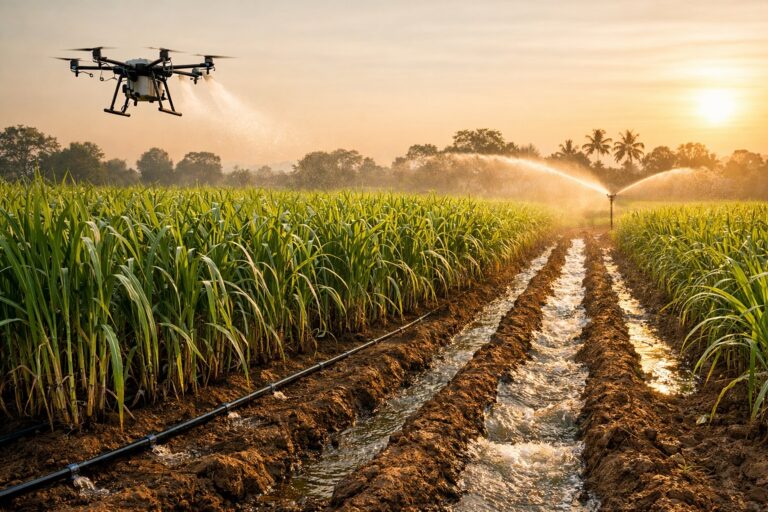
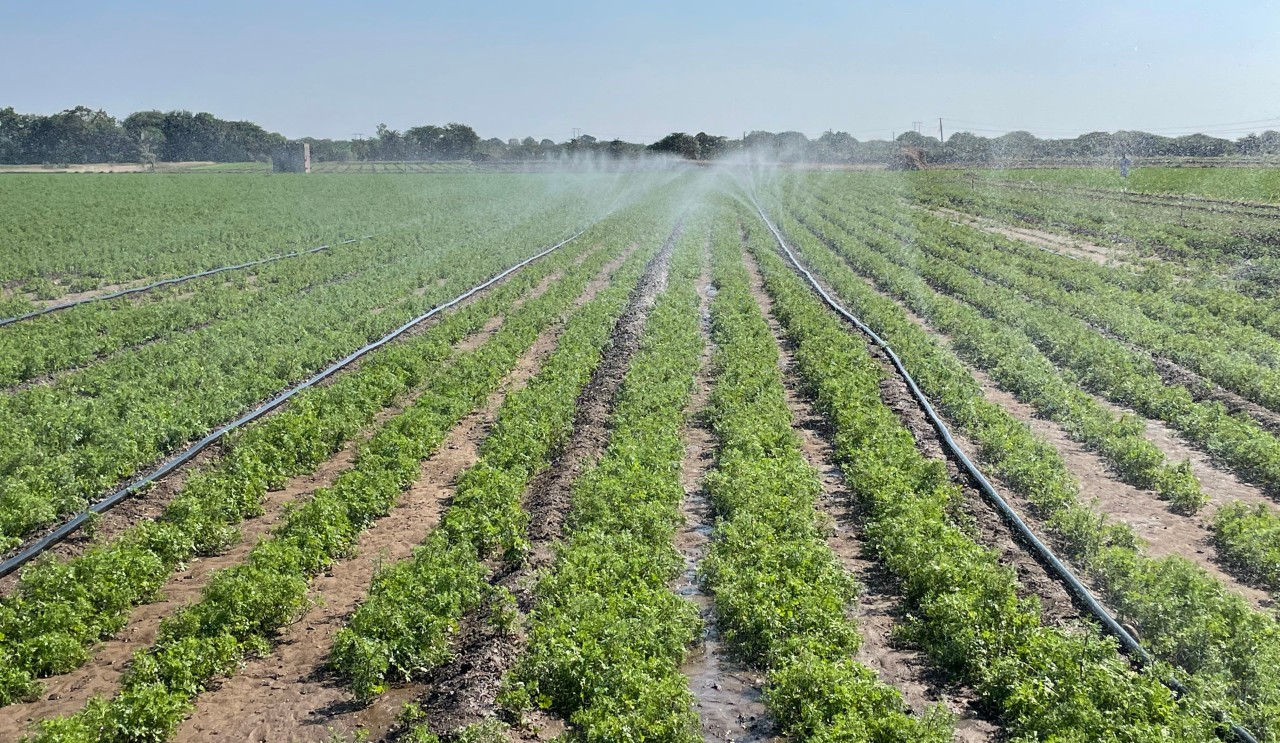
Furrow Irrigation
Furrow irrigation is commonly practiced in chickpea cultivation. Water is applied between rows, allowing moisture to reach the root zone without causing waterlogging.
Flood Irrigation
Flood irrigation is sometimes used but must be carefully managed. Excess water can lead to root diseases and poor aeration.
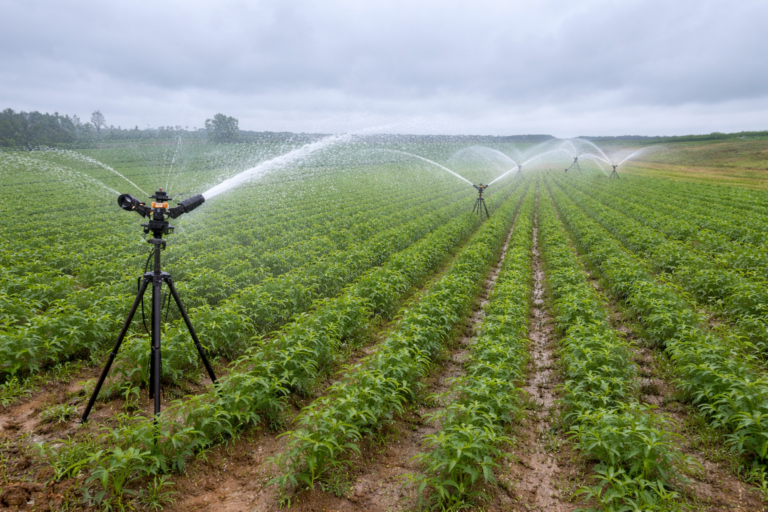
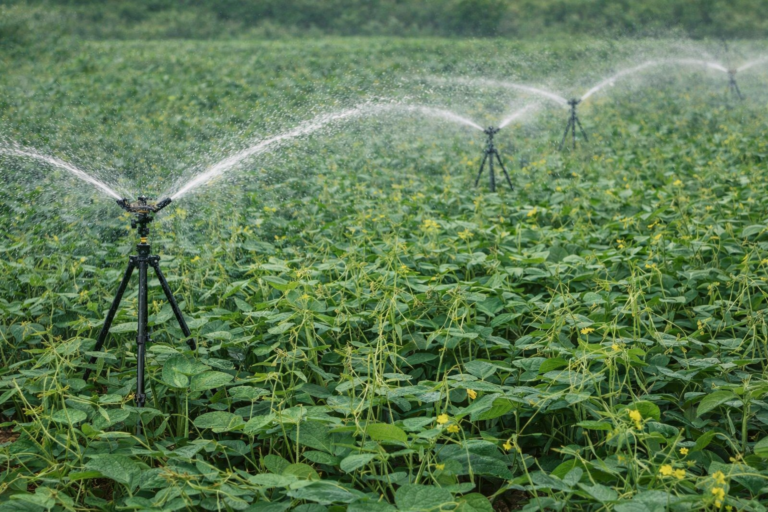
Sprinkler Irrigation
Sprinkler systems are suitable for chickpea, especially in sandy soils and uneven terrain. They ensure uniform water distribution and efficient water use.
- Reduces water wastage
- Prevents soil erosion
- Improves moisture control
Drip Irrigation
Drip irrigation delivers water directly to the root zone and improves water-use efficiency. It is beneficial in water-scarce regions and helps reduce disease incidence by keeping foliage dry.
Drip systems also allow fertigation, improving nutrient availability.
Drainage Management in Chickpea Fields
Chickpea is highly sensitive to waterlogging. Even short periods of standing water can cause root rot and fungal diseases.
To ensure proper drainage:
- Maintain proper land leveling
- Provide drainage channels in heavy soils
- Avoid over-irrigation
Well-drained soils promote healthy root growth and better nodulation.
Impact of Irrigation on Nutrient Uptake
Balanced irrigation enhances nutrient absorption, particularly phosphorus and potassium. Excess irrigation can cause nutrient leaching and reduce nitrogen fixation efficiency.
Proper water management improves fertilizer use efficiency and supports higher productivity.
Water-Saving Techniques in Chickpea Cultivation
- Pre-sowing irrigation followed by conservation tillage
- Mulching to reduce evaporation
- Alternate furrow irrigation
- Soil moisture monitoring before irrigation
- Use of short-duration drought-tolerant varieties
These techniques help conserve water while maintaining yield stability.
Common Irrigation Mistakes in Chickpea Farming
- Over-irrigation during the vegetative stage
- Skipping irrigation at flowering
- Poor drainage management
- Late irrigation during maturity
Avoiding these mistakes ensures better pod development and grain quality.
Climate Considerations for Chickpea Irrigation
Chickpea is typically grown in cool, dry climates during the Rabi season. High temperatures combined with moisture stress during flowering can significantly reduce yield.
Monitoring weather conditions helps in timely irrigation scheduling and prevents stress during critical growth stages.
FAQs on Irrigation for Chickpea
How much water does chickpea require?
Chickpea requires approximately 250-400 mm of water during its crop cycle.
Which stage is most critical for irrigation in chickpea?
The flowering and pod development stages are most critical.
Can chickpeas be grown without irrigation?
Yes, chickpea is commonly grown under rainfed conditions but benefits from 1–2 irrigations.
Is drip irrigation suitable for chickpea?
Yes, drip irrigation improves water-use efficiency and reduces disease risk.
Does waterlogging affect chickpea?
Yes, chickpea is highly sensitive to waterlogging and poor drainage.
How many irrigations are required under irrigated conditions?
Under irrigated conditions, 2–3 irrigations are generally sufficient.
Should irrigation be stopped before harvest?
Yes, irrigation should be stopped as the crop approaches maturity to allow proper drying and reduce disease risk.
Conclusion
Irrigation for Chickpea requires careful planning despite the crop’s drought tolerance. While chickpea can grow under limited moisture, timely irrigation during flowering and pod development significantly enhances yield and grain quality.
By adopting efficient irrigation methods, ensuring proper drainage, and prioritizing water application at critical growth stages, farmers can achieve higher productivity while conserving water resources. Proper water management makes chickpea cultivation more profitable and sustainable.