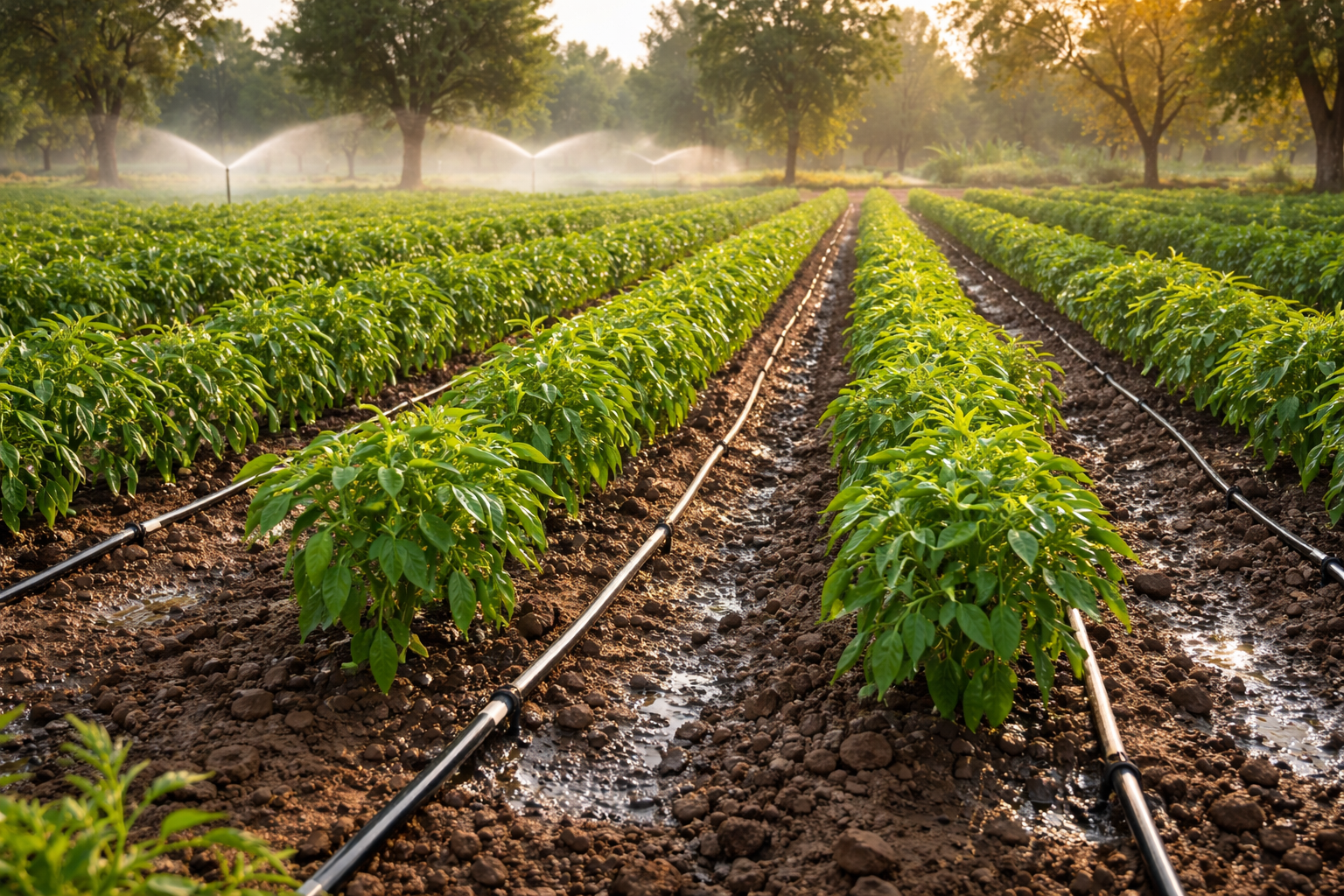
Irrigation for Chilli : Complete Water Management Guide for Higher Yield
Chilli (mirch) is one of the most important spice and vegetable crops grown across India, both for green consumption and dry red chilli production. Major chilli-growing states include Andhra Pradesh, Telangana, Karnataka, Maharashtra, and Madhya Pradesh. Since chilli is a sensitive crop with moderate water requirements, proper irrigation management plays a crucial role in determining yield, fruit quality, and pungency.
Chilli plants are highly sensitive to water stress as well as excess moisture. Improper irrigation can lead to flower drop, poor fruit setting, and increased pest and disease incidence. Therefore, maintaining balanced soil moisture is essential throughout the crop cycle.
If you are already exploring Irrigation in India, understanding crop-specific practices like chilli irrigation can significantly improve productivity and water efficiency.
Importance of Irrigation in Chilli Cultivation
Chilli requires careful water management due to its shallow root system and sensitivity to moisture fluctuations.
- Ensures proper plant establishment after transplanting
- Supports healthy vegetative growth
- Improves flowering and fruit setting
- Enhances fruit size, color, and quality
- Reduces flower and fruit drop
Irregular watering is one of the major reasons for low yield in chilli farming.
Water Requirement of Chilli Crop
Chilli requires approximately 500 mm to 700 mm of water during its entire growth period. The requirement varies depending on soil type, climate, and irrigation method.
Key factors affecting water requirement:
- Soil type (sandy soils need frequent irrigation)
- Temperature and humidity
- Crop growth stage
- Season (Kharif, Rabi, or summer)
Compared to tomato irrigation, chilli requires slightly less water but more precise moisture control.
Critical Stages for Irrigation in Chilli
Transplanting Stage (0–10 Days)
Light irrigation is essential immediately after transplanting to ensure proper root establishment.
Vegetative Growth Stage (10–30 Days)
Regular irrigation supports leaf and branch development.
Flowering Stage (30–50 Days)
This is a highly critical stage. Moisture stress can lead to heavy flower drop.
Fruit Development Stage (50–80 Days)
Consistent moisture is required for proper fruit growth and development.
Harvesting Stage
Moderate irrigation should be maintained to support continuous fruit picking.
Irrigation Schedule for Chilli
The frequency of irrigation depends on soil type and weather:
- Sandy soil: Every 2–3 days
- Loamy soil: Every 4–6 days
- Clay soil: Every 6–8 days
Frequent light irrigation is preferred over heavy irrigation at long intervals.
Best Irrigation Methods for Chilli
Furrow Irrigation
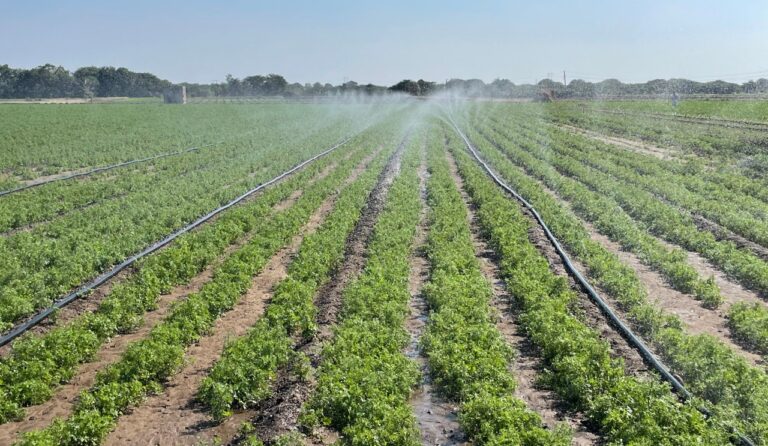
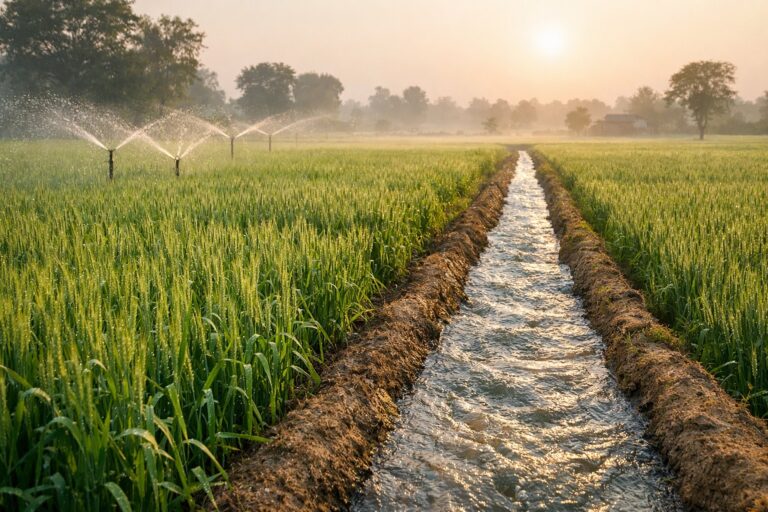
This traditional method involves supplying water through furrows between crop rows.
- Low cost and easy to implement
- Suitable for small-scale farmers
- Requires proper leveling
Sprinkler Irrigation
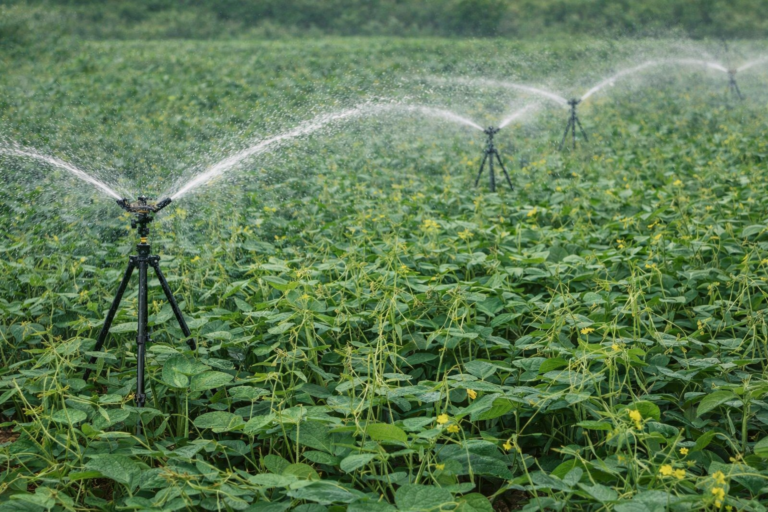
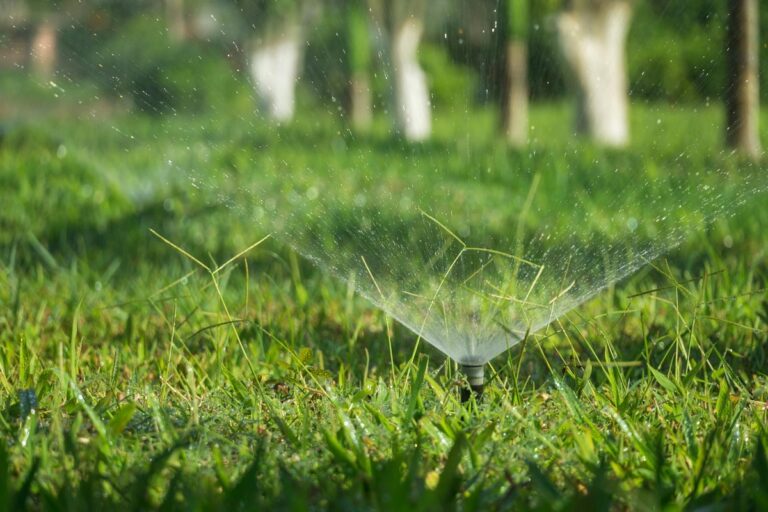
Sprinklers provide uniform water distribution and are suitable for uneven fields.
Explore more systems in Types of Irrigation in India.
Drip Irrigation (Highly Recommended)
Drip irrigation is the most efficient method for chilli cultivation.
- Saves water up to 50–60%
- Maintains consistent soil moisture
- Reduces weed growth
- Improves yield and fruit quality
- Supports fertigation
Drip irrigation is ideal for commercial chilli farming and water-scarce regions.
Drainage Management in Chilli Fields
Chilli plants are highly sensitive to waterlogging, which can cause root rot and fungal diseases.
- Ensure proper field leveling
- Use raised beds or ridges
- Avoid over-irrigation
- Provide drainage channels
Impact of Irrigation on Chilli Yield
Proper irrigation management directly influences chilli yield and quality.
- Improves fruit size and uniformity
- Enhances color and pungency
- Reduces flower and fruit drop
- Increases overall productivity
Efficient irrigation can increase yield by 25–40%.
Water-Saving Tips for Chilli Farming
- Adopt drip irrigation systems
- Apply mulching to conserve soil moisture
- Irrigate during morning or evening hours
- Monitor soil moisture regularly
- Avoid unnecessary irrigation
Common Irrigation Mistakes to Avoid
- Over-irrigation leading to root diseases
- Irregular watering is causing flower drop
- Ignoring critical growth stages
- Poor drainage management
Avoiding these mistakes helps ensure better crop performance.
FAQs on Irrigation for Chilli
How often should chilli be irrigated?
Chilli should be irrigated every 2–6 days, depending on soil type and weather.
Which stage is most critical for irrigation?
Flowering and fruit development stages are the most critical.
How much water does chilli require?
Chilli requires around 500–700 mm of water during the crop cycle.
Is drip irrigation suitable for chilli?
Yes, drip irrigation is the most efficient method for chilli cultivation.
Does over-irrigation affect chilli plants?
Yes, it can cause root rot and reduce yield.
Can chilli tolerate drought?
Chilli can tolerate mild stress but prolonged drought reduces yield significantly.
Conclusion
Proper irrigation management is essential for successful chilli cultivation. Since chilli is sensitive to both excess and deficit moisture, maintaining balanced soil moisture throughout the crop cycle is critical for achieving higher yield and better fruit quality.
Farmers who adopt efficient irrigation methods like drip systems, ensure proper drainage, and follow a consistent irrigation schedule can significantly improve productivity. By integrating these practices with knowledge from Simple Irrigation, growers can achieve sustainable and profitable chilli farming.