Irrigation for Groundnut (Peanut): Water Management for Higher Yield and Better Pod Development
Groundnut, commonly known as peanut, is one of the most important oilseed crops cultivated in India. It is widely grown in states such as Gujarat, Andhra Pradesh, Tamil Nadu, Karnataka, Rajasthan, and Maharashtra. Groundnut is valued for its edible oil, protein-rich kernels, and importance in crop rotations.
Although groundnut is considered moderately drought-tolerant, proper irrigation management is essential for achieving higher yields and better pod quality. The crop is particularly sensitive to moisture stress during flowering and pod development stages. Therefore, efficient irrigation scheduling helps ensure healthy plant growth, improved pegging, and better seed formation.
Importance of Irrigation in Groundnut Cultivation
Groundnut plants develop pods underground through a process called pegging. Adequate soil moisture during this period is essential for successful peg penetration and pod formation. Moisture stress during critical stages can reduce the number of pods and affect seed filling.
Proper irrigation in groundnut farming helps in:
- Ensuring uniform germination and plant establishment
- Supporting healthy vegetative growth
- Improving flowering and peg formation
- Enhancing pod development and seed filling
- Increasing overall yield and kernel quality
Timely irrigation can significantly improve productivity, especially in regions with irregular rainfall.
Water Requirement of Groundnut
The total water requirement of groundnut generally ranges between 500 mm and 700 mm during the entire crop cycle. The actual requirement varies depending on soil type, climatic conditions, crop duration, and variety.
Several factors influence groundnut water requirements:
- Soil texture and water-holding capacity
- Season of cultivation (Kharif, Rabi, or summer)
- Temperature and evaporation rate
- Rainfall distribution
Groundnut grows best in well-drained sandy loam soils where moisture is available, but waterlogging does not occur.
Critical Growth Stages for Irrigation in Groundnut
Providing irrigation during the crop’s most sensitive growth stages is essential for achieving higher yields.
Germination and Seedling Stage (0–15 Days)
Moist soil conditions are necessary for proper seed germination and early seedling establishment. If soil moisture is insufficient, pre-sowing irrigation can help ensure a uniform crop stand.
Vegetative Growth Stage (20–30 Days)
Moisture availability during vegetative growth supports healthy leaf and stem development, which contributes to better photosynthesis and plant vigor.
Flowering Stage (30–45 Days)
This is one of the most critical stages for irrigation. Moisture stress during flowering can reduce flower production and affect peg formation.
Pegging and Pod Formation Stage (45–70 Days)
During this stage, pegs penetrate the soil and develop into pods. Adequate soil moisture is essential for successful pod formation and development.
Pod Development Stage (70–100 Days)
Proper moisture during pod filling improves seed size, kernel weight, and oil content.
Number of Irrigations Required
The number of irrigations depends on seasonal conditions and soil moisture availability.
- Kharif crop: Usually rainfed but may require 1–2 supplemental irrigations during dry spells
- Rabi crop: Typically requires 4–6 irrigations
- Summer crop: Requires about 6–8 irrigations due to high evaporation
If water is limited, irrigation should be prioritized during the flowering and pegging stages.
Methods of Irrigation for Groundnut
Furrow Irrigation
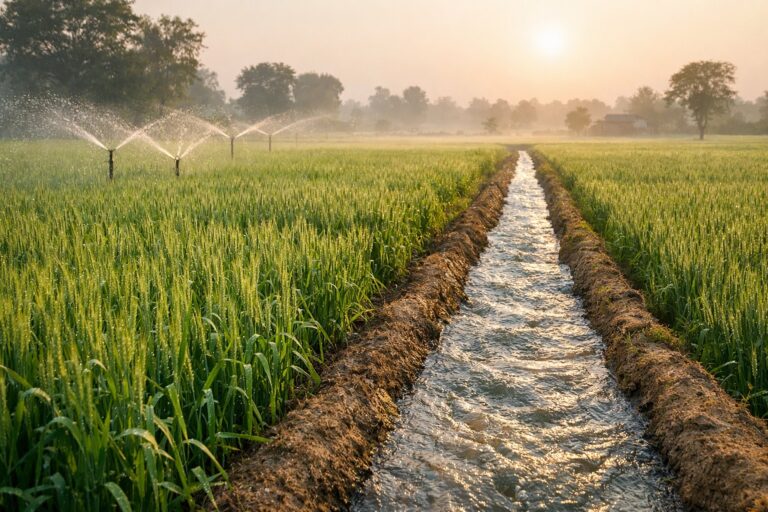
Furrow irrigation is commonly practiced in groundnut cultivation. Water flows through furrows between crop rows, allowing gradual infiltration into the root zone.
- Efficient water distribution
- Reduced risk of waterlogging
- Better control of irrigation quantity
Sprinkler Irrigation
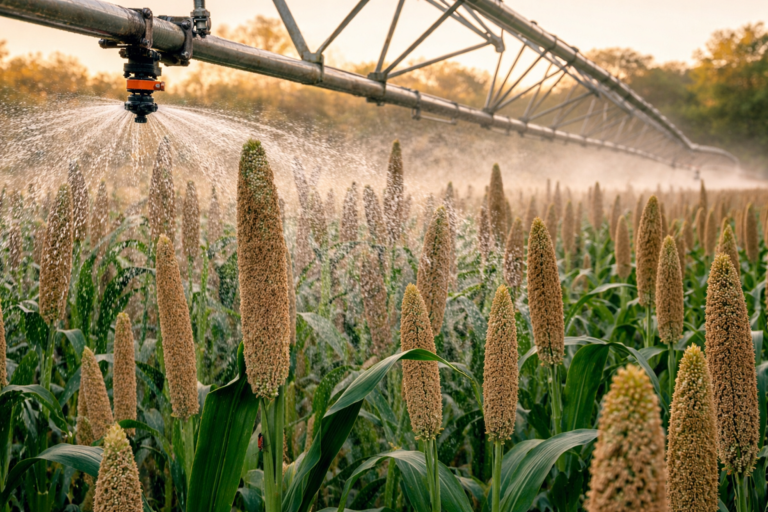
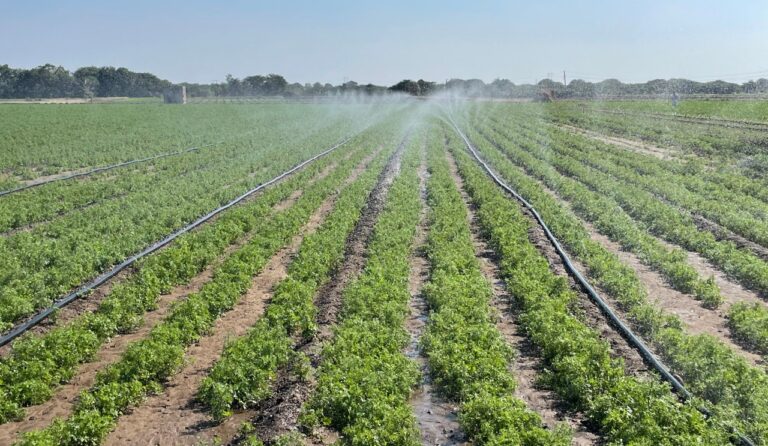
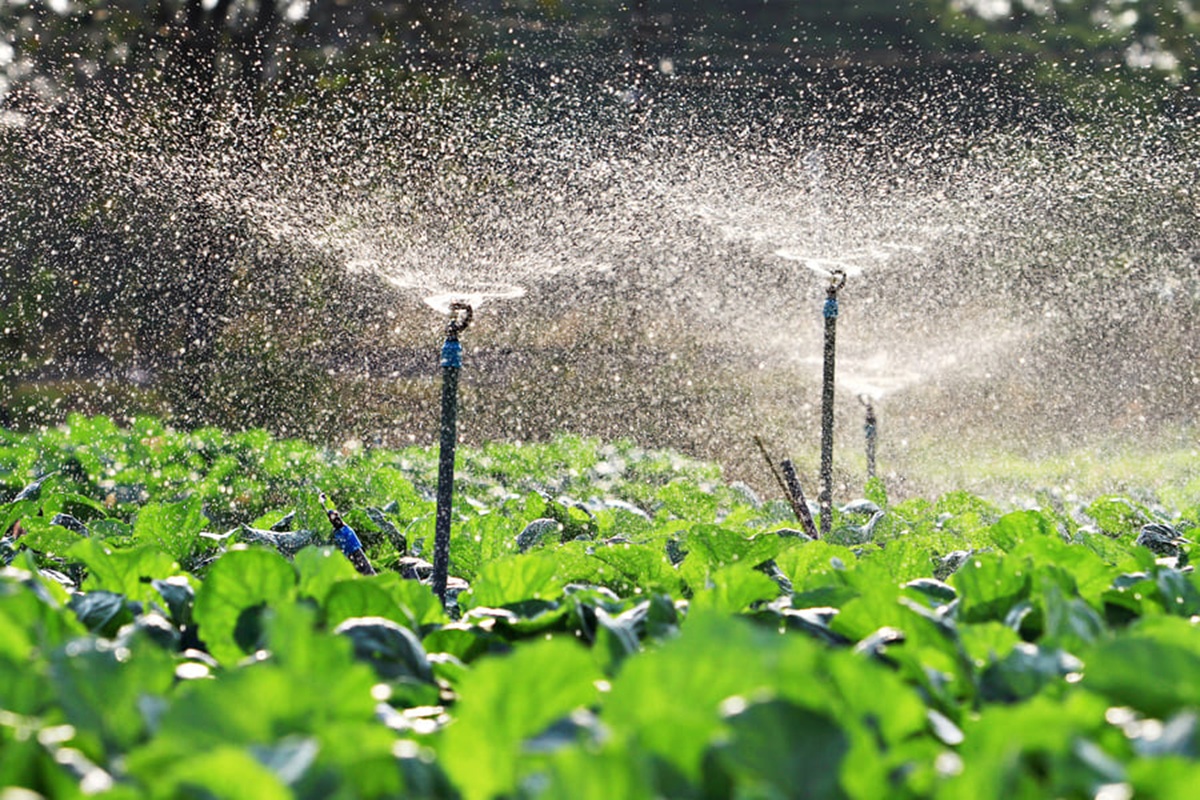
Sprinkler irrigation is widely recommended for groundnut, especially in sandy soils and uneven terrain. It ensures uniform water application and improves water-use efficiency.
Drip Irrigation
Drip irrigation provides water directly to the root zone and reduces evaporation losses. It is particularly useful in water-scarce regions and helps improve water-use efficiency.
Drip systems also allow fertigation, which improves nutrient availability to plants.
Drainage Management in Groundnut Fields
Groundnut plants are highly sensitive to waterlogging. Excess moisture can reduce root oxygen supply and increase the risk of fungal diseases.
Effective drainage management includes:
- Avoiding excessive irrigation
- Ensuring proper field leveling
- Providing drainage channels in heavy soils
- Avoiding irrigation before rainfall
Impact of Irrigation on Groundnut Yield
Timely irrigation significantly influences pod formation, kernel development, and overall yield. Moisture stress during pegging and pod development stages can drastically reduce productivity.
Studies show that proper irrigation management can increase groundnut yield by 30–40 percent compared to crops grown entirely under moisture stress.
Water-Saving Techniques in Groundnut Farming
- Use mulching to reduce soil moisture loss
- Adopt laser land leveling for uniform irrigation
- Use drought-tolerant varieties
- Monitor soil moisture before irrigation
- Apply irrigation during cooler hours of the day
Common Irrigation Mistakes in Groundnut Cultivation
- Over-irrigation causing waterlogging
- Skipping irrigation during the flowering and pegging stages
- Poor drainage management
- Irrigating during the crop maturity stage
Avoiding these mistakes helps maintain healthy crop growth and stable yield.
Seasonal Irrigation Considerations
Groundnut is grown in different seasons across India, including Kharif, Rabi, and summer. The irrigation schedule should be adjusted according to rainfall patterns and climatic conditions.
Summer crops generally require more frequent irrigation due to higher temperatures and faster evaporation, while Kharif crops may rely more on monsoon rainfall.
FAQs on Irrigation for Groundnut
How much water does groundnut require?
Groundnut typically requires around 500–700 mm of water during the entire crop cycle.
Which stage is most critical for irrigation in groundnut?
The flowering and pegging stages are the most critical stages for irrigation.
How many irrigations are required for groundnut?
Depending on the season, groundnuts may require 4–8 irrigations.
Is groundnut sensitive to waterlogging?
Yes, groundnut is highly sensitive to waterlogging and requires well-drained soil.
What irrigation method is best for groundnut?
Sprinkler irrigation is considered highly suitable, although furrow and drip irrigation are also effective.
Should irrigation be stopped before harvest?
Yes, irrigation should be stopped during the maturity stage to allow proper drying of pods before harvesting.
Does irrigation affect groundnut oil content?
Yes, proper irrigation during pod development improves kernel filling and oil content.
Conclusion
Efficient irrigation management is essential for successful groundnut cultivation. Although the crop can tolerate moderate drought conditions, moisture stress during flowering, pegging, and pod development stages can significantly reduce yield.
By applying irrigation at the right time, maintaining proper drainage, and adopting water-efficient irrigation methods, farmers can improve groundnut productivity and ensure better kernel quality. Proper water management not only increases yield but also supports sustainable oilseed farming.