Irrigation for Maize (Corn): Practical Water Management for Higher Yield
Irrigation for Maize (Corn) plays a decisive role in determining grain yield, cob size, and overall crop health. Maize is one of the most widely grown cereal crops in India, cultivated during Kharif, Rabi, and even summer seasons in several states. Although maize is relatively tolerant to short dry spells compared to rice, it is highly sensitive to moisture stress at specific growth stages. Proper irrigation management ensures uniform germination, better root development, and improved grain filling.
In recent years, maize cultivation has expanded due to increasing demand from poultry feed, starch industries, and food processing units. With changing rainfall patterns and frequent dry spells, planned irrigation has become essential for stabilizing production. Understanding when and how much water to apply can significantly increase productivity while conserving water resources.
Importance of Irrigation in Maize Cultivation
Maize has a moderately deep root system, capable of extracting moisture from deeper soil layers. However, for high yields, the crop requires adequate soil moisture throughout its growth period. Water stress during critical stages can drastically reduce kernel number and grain weight.
Proper irrigation in maize farming helps in:
- Ensuring uniform seed germination
- Promoting vigorous vegetative growth
- Supporting tassel and silk development
- Improving grain filling and cob size
- Enhancing nutrient uptake efficiency
Even short periods of moisture stress during flowering can cause significant yield loss. Therefore, irrigation planning is not just about supplying water, but about applying it at the right time.
Water Requirement of Maize (Corn)
The total water requirement of maize varies depending on climate, soil type, variety, and season. On average, maize requires between 500 mm and 800 mm of water during its crop cycle.
Factors influencing water requirement include:
- Season of cultivation (Kharif, Rabi, or Summer)
- Temperature and evaporation rate
- Soil texture and water-holding capacity
- Crop duration and hybrid type
Summer maize requires more frequent irrigation due to higher evaporation, whereas Kharif maize may depend partially on rainfall but still needs supplemental irrigation during dry spells.
Critical Growth Stages for Irrigation in Maize
Maize is particularly sensitive to water stress during certain stages. Irrigation for maize should be prioritized at these critical points to avoid yield reduction.
Germination and Seedling Stage (0–20 Days)
Moist soil is essential for proper seed germination and early root development. If soil moisture is insufficient at sowing, a pre-sowing irrigation is recommended. Poor moisture during this stage results in an uneven plant stand.
Knee-High Stage (25–35 Days)
This stage marks rapid vegetative growth. The plant develops more leaves and prepares for reproductive development. Adequate moisture ensures healthy plant growth and stronger stalk formation.
Tasseling and Silking Stage (45–65 Days)
This is the most critical stage in maize cultivation. Moisture stress during tasseling and silking can lead to poor pollination and reduced kernel formation. Even a brief drought during this period can cause severe yield loss.
Ensuring sufficient soil moisture at this stage is essential for proper fertilization and cob development.
Grain Filling Stage (70–100 Days)
During grain filling, kernels accumulate starch and gain weight. Moisture deficiency during this stage reduces grain size and overall yield. Irrigation should be maintained, but not excessively.
Frequency and Scheduling of Irrigation
The frequency of irrigation depends on soil type and climatic conditions. Light soils require more frequent watering than heavy soils.
- Sandy soils: every 5–7 days during summer
- Loamy soils: every 7–10 days
- Clay soils: every 10–12 days
Instead of following fixed intervals, farmers should observe soil moisture conditions. If the top 5–7 cm soil layer appears dry and crumbly, irrigation may be necessary. Avoid over-irrigation, as waterlogging can damage roots and reduce oxygen availability.
Methods of Irrigation for Maize
Furrow Irrigation
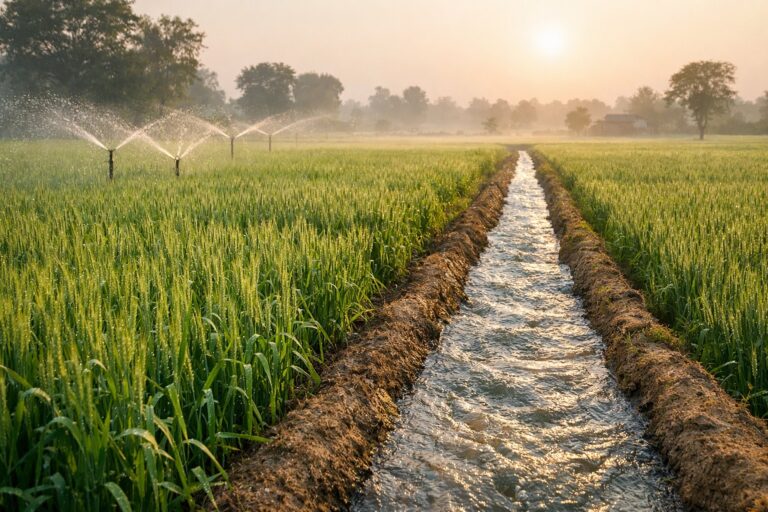
Furrow irrigation is commonly used in maize cultivation. Water is allowed to flow between crop rows and infiltrates into the root zone. This method is suitable for row-planted crops like maize and is relatively simple to manage.
Proper land leveling improves uniform distribution and reduces water loss.
Check Basin Irrigation
In small fields, check basin irrigation is practiced where the field is divided into small basins surrounded by bunds. Water is allowed to stand temporarily and infiltrate.
This method is easy but may lead to uneven distribution if not carefully managed.
Sprinkler Irrigation
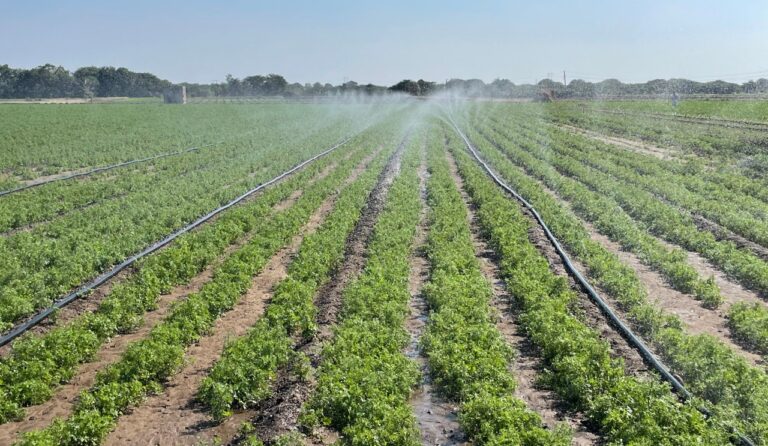
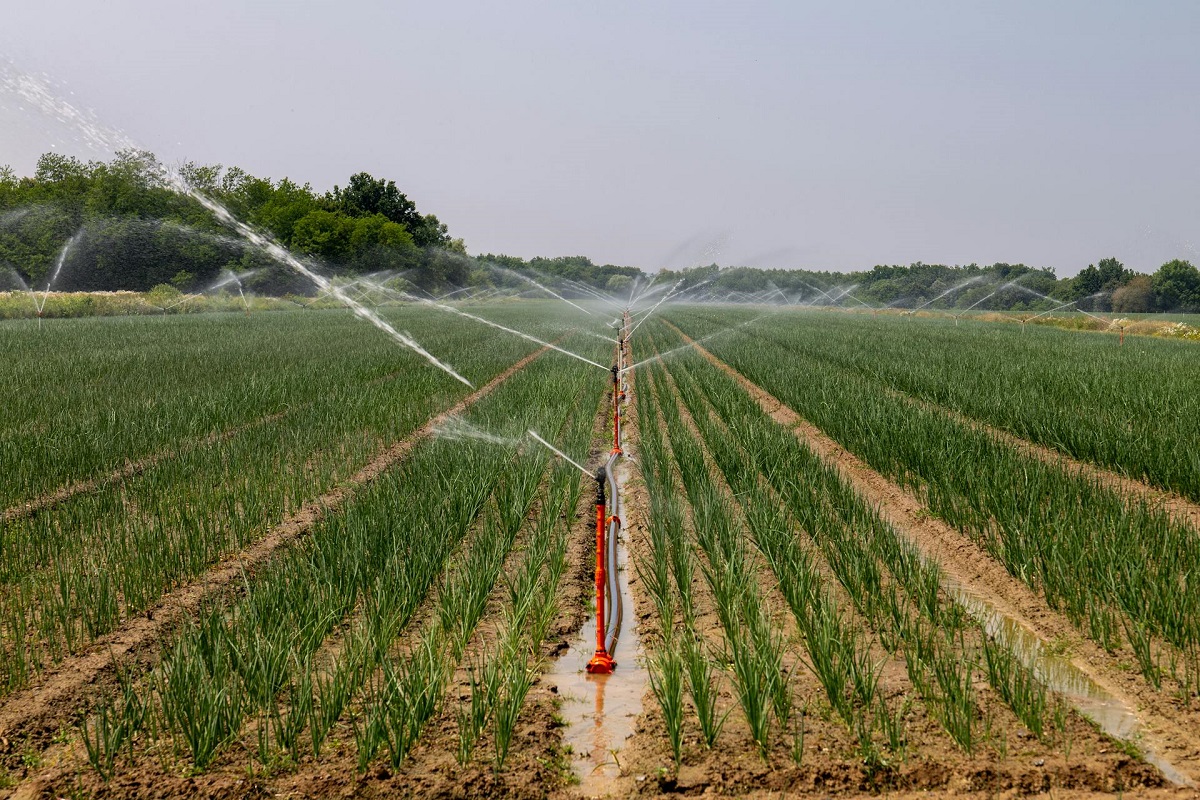
Sprinkler systems are effective in sandy soils and undulating lands. They distribute water uniformly across the field and are particularly useful in areas with limited water supply.
Advantages include:
- Uniform water application
- Reduced soil erosion
- Better control over irrigation timing
Drip Irrigation
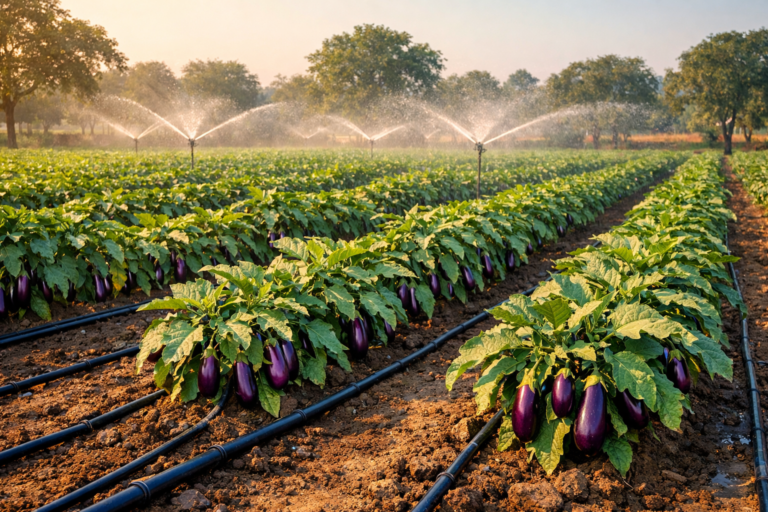
Drip irrigation delivers water directly to the root zone through emitters. Though more commonly used in horticultural crops, drip systems are increasingly being adopted in maize cultivation.
Benefits of drip irrigation include:
- Water savings up to 40%
- Reduced weed growth
- Improved fertilizer efficiency through fertigation
- Higher water-use efficiency
Drip irrigation is especially suitable for water-scarce regions and high-value hybrid maize cultivation.
Drainage Management in Maize Fields
While maize requires adequate moisture, it is highly sensitive to waterlogging. Standing water for more than 24–48 hours can damage roots and reduce plant growth.
To prevent waterlogging:
- Ensure proper field leveling
- Provide surface drainage channels
- Avoid excessive irrigation during heavy rainfall
Well-drained soils promote strong root development and better nutrient absorption.
Impact of Irrigation on Fertilizer Efficiency
Balanced irrigation enhances nutrient uptake. Nitrogen, phosphorus, and potassium are more effectively absorbed when adequate soil moisture is maintained.
Over-irrigation can lead to nutrient leaching, particularly nitrogen, resulting in higher input costs and reduced efficiency. Drip irrigation combined with fertigation improves fertilizer use and minimizes wastage.
Water-Saving Practices in Maize Cultivation
Efficient water management is essential in areas facing water scarcity. Farmers can adopt the following strategies:
- Mulching to reduce evaporation losses
- Use of drought-tolerant maize hybrids
- Laser land leveling for uniform irrigation
- Alternate furrow irrigation
- Scheduling irrigation based on soil moisture monitoring
These practices help conserve water while maintaining yield levels.
Common Irrigation Mistakes in Maize Farming
- Skipping irrigation during tasseling stage
- Over-irrigating immediately after fertilizer application
- Poor drainage management
- Ignoring soil type while scheduling irrigation
Avoiding these mistakes ensures healthier plants and better grain development.
Effect of Proper Irrigation on Yield
Timely irrigation ensures optimal plant height, strong stalk formation, and uniform cob development. Adequate moisture during the flowering and grain filling stages significantly increases kernel number and weight.
Studies have shown that moisture stress during flowering can reduce yield by up to 40%. Therefore, irrigation at critical stages directly impacts productivity and profitability.
FAQs on Irrigation for Maize (Corn)
How much water does maize require?
Maize typically requires 500–800 mm of water during its growth cycle, depending on climate and soil conditions.
Which stage is most critical for irrigation in maize?
The tasseling and silking stage is the most critical for irrigation in maize.
Can maize tolerate drought?
Maize can tolerate short dry spells, but prolonged moisture stress, especially during flowering, reduces yield significantly.
Is drip irrigation suitable for maize?
Yes, drip irrigation improves water-use efficiency and supports higher yields in maize cultivation.
How often should maize be irrigated?
Irrigation frequency ranges from 5 to 12 days, depending on soil type and season.
Does waterlogging affect maize?
Yes, waterlogging damages roots and reduces oxygen supply, negatively impacting plant growth.
Should irrigation be reduced before harvest?
Yes, irrigation is generally stopped as the crop approaches physiological maturity to allow proper grain drying.
Conclusion
Irrigation for Maize (Corn) requires careful timing, proper scheduling, and suitable irrigation methods. Although maize is moderately drought-tolerant, moisture stress at critical growth stages such as tasseling and grain filling can significantly reduce yield.
By adopting efficient irrigation practices, ensuring proper drainage, and using water-saving techniques like drip or sprinkler systems, farmers can enhance productivity while conserving water resources. Planned irrigation management not only improves grain yield but also strengthens the overall sustainability of maize cultivation.